What is Impressionist Painting Style? A Deep Dive
Uncover the revolutionary art movement that captured fleeting moments of light and color, transforming the art world forever.
Explore ImpressionismKey Takeaways
- ✓ Originated in France in the 1860s, gaining prominence in the 1870s.
- ✓ Emphasizes capturing the immediate 'impression' of a scene, especially light and its effects.
- ✓ Characterized by visible brushstrokes, open composition, and an emphasis on light.
- ✓ Often depicted ordinary subject matter, such as landscapes, cityscapes, and everyday life.
- ✓ Rejected academic painting traditions, sparking controversy and innovation.
How It Works
Impressionist painters sought to capture the fleeting, sensory experience of a specific moment in time. They often painted outdoors to directly observe changing light.
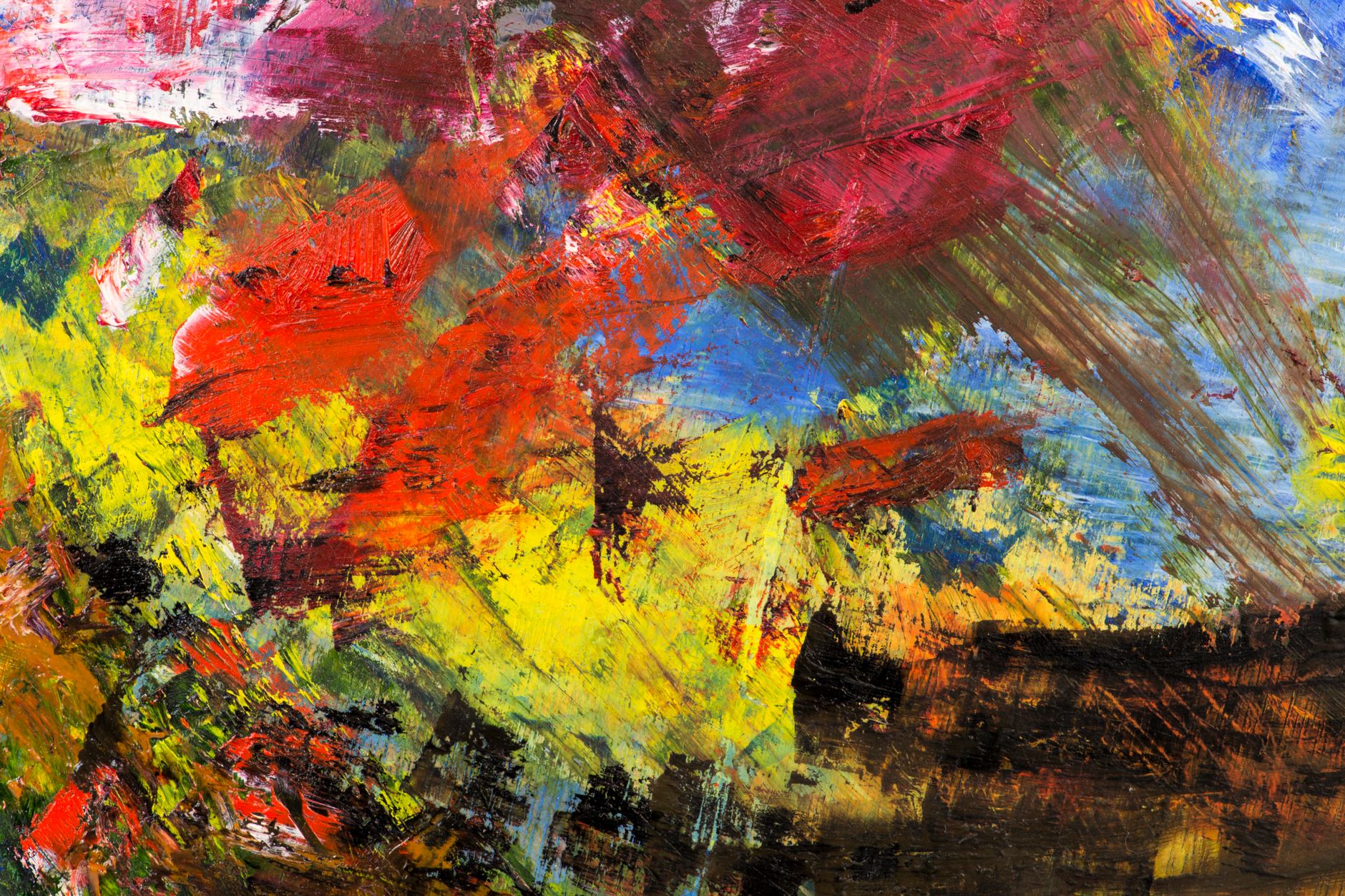
Instead of blending colors smoothly, artists applied distinct, unmixed brushstrokes side-by-side. This technique allowed the viewer's eye to blend the colors optically.
The primary subject often became the way light interacted with surfaces and created atmosphere. Shadows were depicted with color, not just black or gray.
The artist's personal 'impression' of the scene was paramount, leading to a less realistic, more interpretative depiction. This challenged traditional notions of objective truth in art.
The Birth of a Movement: Defining Impressionism's Core
 Photo: Juan Koffee / Pexels
The term 'Impressionism' itself originated from a derisive review of Claude Monet's painting, *Impression, Sunrise*, exhibited in 1874. Critic Louis Leroy sarcastically dubbed the artists 'Impressionists,' intending it as an insult, suggesting their works were mere sketches, unfinished 'impressions.' Ironically, the artists embraced the label, transforming it into a badge of honor. This movement championed visible brushstrokes, a technique that deliberately left the artist's hand evident, contrasting sharply with the academic ideal of an invisible brush. Colors were often applied directly to the canvas, unmixed, allowing the viewer's eye to blend them optically, creating a vibrant, shimmering effect. The focus shifted from *what* was depicted to *how* it was depicted, particularly the ephemeral qualities of light and color.
Open compositions, often resembling snapshots, further distinguished Impressionist works. Artists frequently cropped their subjects in unconventional ways, inspired by the advent of photography and Japanese prints. They moved their easels outdoors, practicing *en plein air* painting, to directly observe and capture the changing light and colors of nature. This direct observation led to a radical reinterpretation of shadows, which were no longer simply dark areas but infused with color, reflecting the ambient light. The subjects themselves became democratic: landscapes, cityscapes, portraits of everyday people, leisure activities, and domestic scenes replaced grand historical narratives. Understanding the nuances of art movements like Impressionism reveals a pivotal moment where art began to reflect individual perception and the subjective experience of reality, paving the way for countless artistic innovations that followed. This initial foray into capturing the momentary and personal was a profound shift, laying the groundwork for much of modern art.
Key Characteristics and Revolutionary Techniques
 Photo: Dreamscolor Media / Pexels
One of the most recognizable features of Impressionist painting is the use of visible, short, thick brushstrokes. These 'broken' brushstrokes were not meant to create smooth, polished surfaces but rather to convey a sense of immediacy and movement. By placing distinct dabs of color side-by-side, the artists relied on the viewer's eye to blend these colors when observed from a distance, a phenomenon known as optical mixing. This technique created a sense of vibrancy and luminosity that traditional methods could not achieve. Shadows, in particular, were revolutionized; instead of using black or brown, Impressionists rendered shadows with complementary colors, reflecting the colors of the surrounding environment and making them appear more alive and integral to the overall light scheme.
The Impressionists also favored *en plein air* (outdoors) painting, a practice that was revolutionary for its time. Previously, landscapes were often painted in the studio, based on sketches made outdoors. By moving their easels outside, artists could directly observe and capture the fleeting moments of light, atmosphere, and the subtle shifts in color that occur in nature. This practice necessitated working quickly, leading to the spontaneous, sketch-like quality often associated with the style. The quick execution also meant less emphasis on precise drawing and more on the overall effect and mood.
Subject matter also underwent a significant transformation. Instead of grand narratives, Impressionists focused on scenes of modern life: Parisian boulevards, bustling cafes, tranquil gardens, picnics in the park, and intimate portraits. They captured the leisure activities of the burgeoning middle class, reflecting the societal changes of their era. This democratization of subject matter further distanced them from the academic tradition and brought art closer to everyday experience. The interplay of these characteristics—visible brushstrokes, vibrant color, emphasis on light, *en plein air* painting, and modern subjects—collectively answers what is Impressionist painting style, marking it as a pivotal moment in the history of art that profoundly influenced subsequent movements.
Iconic Artists and Their Enduring Legacy in Impressionism
 Photo: Anna / Pexels
Pierre-Auguste Renoir, another central figure, brought a different sensibility to Impressionism, particularly through his focus on human figures and social scenes. His paintings, such as *Bal du moulin de la Galette*, are filled with warmth, joy, and a celebration of life. Renoir's distinct use of dappled light and vibrant colors to depict lively crowds and intimate portraits showcases the Impressionist ability to infuse everyday scenes with beauty and emotion. While sharing the Impressionist love for light and color, Renoir often retained a more defined sense of form in his figures, setting him apart from Monet's more abstract approach.
Edgar Degas, though often associated with Impressionism, preferred the term 'Realist' or 'Independent.' His unique perspective focused on capturing candid moments, particularly of ballet dancers, racehorses, and women bathing. Degas's compositions, often influenced by photography and Japanese prints, featured unusual angles and cropped figures, creating a sense of immediacy and spontaneity. His masterful use of pastels brought a distinct texture and luminosity to his work, demonstrating the diverse interpretations within the broader Impressionist movement. His ability to capture movement and the inner lives of his subjects through unconventional framing is a critical aspect of his contribution.
Camille Pissarro, often called the 'father of Impressionism,' played a crucial role in uniting the group and organizing their exhibitions. His landscapes and cityscapes, particularly his series of Parisian boulevards, are characterized by their consistent brushwork and a deep understanding of natural light and atmospheric conditions. Pissarro's commitment to painting *en plein air* and his exploration of rural and urban scenes exemplify the Impressionist desire to depict the modern world honestly. The collective work of these artists, alongside others like Alfred Sisley and Berthe Morisot, solidified the principles of Impressionism and left an indelible mark on art history. Their courage to challenge the status quo and their innovative approaches to light, color, and subject matter opened doors for subsequent avant-garde movements, making Impressionism a foundational pillar of modern art and inspiring countless artists to explore new forms of artistic expression.
Beyond the Canvas: The Lasting Impact and Common Misconceptions
 Photo: Katie Rainbow 🏳️🌈 / Pexels
Impressionism also democratized art, making it accessible and relatable by focusing on everyday subjects and scenes of modern life. This shift from grand narratives to personal experience resonated with a broader audience, fostering a greater appreciation for art that reflected their own world. The movement's commercial success, initially met with scorn, eventually proved that there was a viable market for art outside academic institutions, empowering artists to pursue independent paths.
Despite its widespread recognition today, several common misconceptions about Impressionism persist. One prevalent myth is that Impressionist painters were simply 'lazy' or 'incapable' of drawing precisely. In reality, many Impressionists, like Degas, were highly skilled draftsmen who *chose* to prioritize the fleeting impression over meticulous detail. Their visible brushstrokes were a deliberate artistic choice, not a lack of technical ability. Another misconception is that all Impressionist paintings look alike. While sharing core principles, individual artists developed distinct styles, ranging from Monet's ethereal landscapes to Renoir's vibrant figures and Degas's dynamic compositions. The diversity within the movement is a testament to its richness and adaptability.
Furthermore, some believe Impressionism was solely about 'prettiness' or 'escapism.' While many works depict serene landscapes or joyful social gatherings, the movement was also a commentary on modernity, capturing the rapid changes in urban life, the rise of the middle class, and the shifting relationship between humanity and nature. The very act of painting outdoors, exposed to the elements, was a challenge to the controlled environment of the studio and a statement about engaging with the real world. Ultimately, Impressionism was not merely a style but a revolutionary way of seeing and depicting the world, forever altering our understanding of what art could be.
Comparison
| Feature | Impressionism | Academic Art (Pre-Impressionism) | Post-Impressionism | Realism |
|---|---|---|---|---|
| Brushstrokes | Visible, broken, distinct | Smooth, invisible, blended | Varied, expressive, structured | Often smooth, detailed |
| Subject Matter | Everyday life, landscapes, light | Historical, mythological, religious | Symbolic, emotional, structured | Social issues, ordinary people |
| Emphasis | Light, color, fleeting moment | Form, narrative, moral message | Expression, structure, symbolism | Verisimilitude, social commentary |
| Palette | Bright, vibrant, pure colors | Darker, earth tones, subdued | Varied, often intense, symbolic | Naturalistic, muted |
| Composition | Open, snapshot-like, cropped | Balanced, classical, hierarchical | Varied, often symbolic or geometric | Direct, often unidealized |
What Readers Say
"This article truly illuminated what is Impressionist painting style for me. The explanation of visible brushstrokes and optical mixing was incredibly clear and made me appreciate the technique even more."
Sarah J. · Boston, MA"As an aspiring artist, understanding the *en plein air* approach and the focus on light from this guide was invaluable. It's inspired me to try painting outdoors myself."
David K. · Los Angeles, CA"I always loved Monet, but this piece really explained the *why* behind his work. Now I see how the Impressionists challenged norms and paved the way for modern art."
Emily R. · Chicago, IL"Very comprehensive! While I appreciate the depth, a bit more on the specific chemical properties of the new pigments available at the time could have added another layer. Still, an excellent overview."
Michael T. · Seattle, WA"I used to think Impressionism was just pretty pictures. This article helped me understand it as a rebellious movement that fundamentally changed how we perceive art. Highly recommend!"
Jessica L. · New York, NYFrequently Asked Questions
What is the defining characteristic of Impressionist painting style?
The defining characteristic of Impressionist painting is its emphasis on capturing the immediate, fleeting 'impression' of a scene, particularly the effects of light and atmosphere. This is achieved through visible, broken brushstrokes, a vibrant palette, and often painting outdoors (*en plein air*) to directly observe changing conditions.
Is Impressionism considered a form of realism?
While Impressionism drew inspiration from observing the real world, it departs from traditional realism by prioritizing the artist's subjective perception and the fleeting effects of light over precise, objective detail. It's more about the *impression* of reality than a literal depiction, making it a precursor to modern art's subjective turn.
How did Impressionist painters achieve their vibrant colors?
Impressionist painters achieved vibrant colors by applying pure, unmixed pigments directly to the canvas in distinct brushstrokes. They relied on optical mixing, where the viewer's eye blends the colors from a distance, resulting in a more luminous and lively effect than traditional smooth blending. They also used complementary colors in shadows to avoid dullness.
What was the critical reception of Impressionist art initially?
Initially, Impressionist art was met with strong criticism and ridicule from the art establishment and many critics. It was seen as unfinished, sloppy, and lacking the academic rigor of traditional painting. The term 'Impressionism' itself was coined as a derogatory label, though the artists eventually embraced it.
How does Impressionism differ from Post-Impressionism?
Impressionism focuses on capturing fleeting moments of light and color, often with visible, broken brushstrokes. Post-Impressionism, while building on Impressionist use of color and light, sought to imbue art with more emotional content, symbolic meaning, or structural integrity. Artists like Van Gogh (emotion), Cézanne (structure), and Seurat (scientific application of color) are key Post-Impressionists.
Who should learn about Impressionist painting style?
Anyone interested in art history, aspiring artists, art enthusiasts, and those curious about the origins of modern art should learn about Impressionist painting style. It's a foundational movement that changed how artists perceive and depict reality, offering valuable insights into artistic innovation and cultural shifts.
Were Impressionist paintings safe for public viewing at the time?
Yes, Impressionist paintings were generally safe for public viewing, though their unconventional style often caused controversy and sometimes outrage among viewers accustomed to academic art. The 'risk' was primarily to the established artistic norms and public sensibilities, not physical safety.
What is the future trend for appreciating Impressionist art?
The appreciation for Impressionist art continues to grow, with a trend towards deeper academic study of its social context, scientific underpinnings of color theory, and its enduring influence on contemporary art. Digital reproductions and immersive exhibitions also make these works more accessible globally, ensuring their lasting relevance and popularity.
Now that you have a comprehensive understanding of what is Impressionist painting style, dive deeper into the works of its masters. Explore museums, read more, and let the vibrant world of Impressionism inspire your own appreciation for art.