✓ Characterized by visible brushstrokes and emphasis on light.
✓ Focused on capturing fleeting moments and sensory experience.
✓ Rejected traditional academic painting conventions.
How It Works
1
Understand the Historical Context
Impressionism emerged during a period of rapid societal change and technological advancements in 19th-century France. This context influenced artists to break from established norms and explore new ways of seeing the world.
2
Recognize Core Characteristics
Look for visible brushstrokes, unblended colors, and a focus on light and its changing qualities. Impressionist artists often painted outdoors to capture natural light effects directly.
3
Identify Key Artists
Familiarize yourself with pioneers like Claude Monet, Pierre-Auguste Renoir, Edgar Degas, and Camille Pissarro. Each contributed uniquely to the movement's development and distinct style.
4
Appreciate its Legacy
Understand how Impressionism paved the way for subsequent art movements like Post-Impressionism and Cubism. Its impact on modern art is profound, emphasizing individual perception and subjective experience.
Unveiling the Origins and Core Tenets of Impressionism Art
Photo: Landiva Weber / Pexels
To truly grasp what is Impressionism art, we must first transport ourselves to 19th-century Paris, a city undergoing profound transformation. The mid-1800s saw an explosion of innovation, urbanization, and a shift in cultural values. The traditional art world, dominated by the conservative French Salon, dictated strict rules on subject matter, composition, and technique, favoring historical, mythological, and religious scenes rendered with meticulous detail and smooth brushwork. However, a group of young, rebellious artists found these conventions restrictive and irrelevant to the rapidly changing modern world around them. They sought to capture the fleeting moments of contemporary life, the ever-changing effects of light, and the immediate sensory experience of their surroundings, rather than idealized narratives.
The term 'Impressionism' itself was initially a derogatory label. It originated from a critic's review of Claude Monet's painting, *Impression, Sunrise*, exhibited in 1874 at the first independent exhibition organized by these artists. The critic used 'impression' to mock the unfinished, sketch-like quality of the work, implying it was merely an 'impression' rather than a fully realized painting. Ironically, the artists embraced the term, recognizing its aptness in describing their aim: to capture the immediate visual 'impression' of a scene. Their radical approach involved painting *en plein air* (outdoors), directly observing nature, and recording the momentary effects of light and atmosphere. This was a stark contrast to the academic tradition of working in studios from sketches and established formulas. They were fascinated by how light altered colors and forms, and how the human eye perceives these changes in an instant. This revolutionary focus on perception over literal representation marks a fundamental shift in the history of art. They moved away from the idea that a painting should tell a story or moralize, instead emphasizing the subjective experience of seeing. This emphasis on the artist's personal 'impression' laid foundational groundwork for much of modern art that followed, making it crucial to understand when asking what defines a significant art movement.
The Distinctive Characteristics and Techniques of Impressionist Painters
Photo: Liisbet Luup / Pexels
The hallmark of what is Impressionism art lies in its distinctive characteristics and the innovative techniques employed by its practitioners. Foremost among these is the visible, often chunky, brushstroke. Unlike the smoothly blended surfaces prized by academic art, Impressionists intentionally left their brushstrokes evident, creating a textured surface that conveyed a sense of immediacy and the artist's hand. This technique allowed them to capture the fleeting quality of light and movement, making the viewer's eye actively participate in blending the colors on the canvas.
Another defining feature is the innovative use of color. Impressionists largely abandoned the traditional practice of mixing colors on the palette before applying them to the canvas. Instead, they often placed pure, unmixed colors side-by-side, allowing the viewer's eye to blend them optically. This technique, known as 'divisionism' or 'optical mixing,' resulted in vibrant, luminous colors that shimmered with life, especially when depicting sunlight or reflections on water. Shadows, too, were reimagined; instead of being rendered in black or dark browns, they were often painted with complementary colors, adding depth and vibrancy. For instance, a shadow on a yellow object might be painted with hints of purple, creating a richer, more naturalistic effect than a simple darkening of the primary hue.
The subject matter also underwent a radical transformation. Impressionists turned their gaze to modern life: bustling cityscapes, leisurely picnics, ballet dancers, café scenes, and serene landscapes. They depicted ordinary people engaged in everyday activities, reflecting the changing social landscape of 19th-century France. The focus was on capturing the momentary, the incidental, the transient aspects of urban and suburban life. This included a fascination with water and its reflective properties, as seen in countless works by Monet, and the subtle nuances of changing weather and seasons. The emphasis on light and its effects was paramount, with artists often painting the same scene multiple times under different conditions to explore how light altered its appearance. This relentless pursuit of capturing ephemeral light and color was a radical departure from the static, idealized scenes of the past, making their work instantly recognizable and eternally captivating.
Pioneering Figures: The Visionaries Who Defined Impressionism
When exploring what is Impressionism art, it's impossible to overlook the towering figures who spearheaded this revolutionary movement. While many artists contributed, a core group of visionaries defined its aesthetic and philosophical underpinnings. Claude Monet is arguably the most iconic, often considered the quintessential Impressionist. His relentless pursuit of capturing light and atmosphere, exemplified by his series paintings of Rouen Cathedral, haystacks, and especially his beloved water lilies, showcases the movement's core tenets. Monet's dedication to painting *en plein air* and his meticulous study of how light transforms a subject were unparalleled. He was less interested in the subject itself than in the way light illuminated and altered it, embodying the very essence of the 'impression.'
Pierre-Auguste Renoir brought a different sensibility to Impressionism, focusing more on the human form and the joyful, intimate moments of social life. His paintings often depict groups of people enjoying leisure activities, characterized by soft, feathery brushstrokes and a vibrant palette that conveys warmth and conviviality. Works like *Bal du moulin de la Galette* perfectly capture the lively atmosphere of a Parisian dance hall, brimming with light and movement. Edgar Degas, though often associated with Impressionism, maintained a unique perspective, preferring indoor scenes and artificial light, and focusing on movement, particularly of ballet dancers and bathers. His compositions often feature unusual viewpoints and cropped figures, influenced by Japanese prints and photography, giving his work a modern, candid feel that set him apart while still sharing the Impressionists' interest in capturing modern life and movement.
Camille Pissarro, often called the 'father of Impressionism,' was crucial for his unwavering support of his fellow artists and his consistent experimentation. He explored both rural and urban landscapes with a keen eye for changing light and atmospheric conditions, and his work often reflects a more structured composition than some of his peers. Berthe Morisot and Mary Cassatt, two prominent female Impressionists, brought unique perspectives, often depicting domestic scenes and the lives of women and children with sensitivity and skill, challenging the male-dominated art world. These artists, despite their individual styles, shared a common goal: to break free from academic constraints and capture the subjective, fleeting beauty of the modern world, irrevocably shaping the trajectory of modern art.
Beyond the Canvas: The Enduring Legacy and Impact of Impressionism
Understanding what is Impressionism art is incomplete without acknowledging its profound and enduring legacy. While initially met with ridicule, Impressionism eventually gained acceptance and, more importantly, paved the way for nearly all subsequent modern art movements. Its radical departure from traditional academic painting opened up new avenues for artistic expression, fundamentally altering how artists perceived and represented the world. The emphasis on subjective perception, the exploration of light and color, and the focus on contemporary life freed artists from rigid conventions, allowing for greater personal interpretation and formal experimentation.
Key impacts include:
* **Birth of Post-Impressionism:** Artists like Vincent van Gogh, Paul Cézanne, and Paul Gauguin, while influenced by Impressionism's use of color and light, sought to imbue their work with greater emotional depth, symbolic meaning, or structural integrity. This led to distinct styles that expanded upon, rather than merely replicated, Impressionist ideas.
* **Influence on Fauvism and Expressionism:** The Impressionists' bold use of color directly influenced the Fauves, who took color further, using it for emotional impact rather than purely descriptive purposes. Similarly, Expressionists embraced subjective experience, pushing emotional intensity to the forefront.
* **Modern Art Foundation:** The Impressionist focus on the act of painting itself, the visible brushstroke, and the artist's personal vision became central to much of 20th-century art, from Cubism's deconstruction of form to Abstract Expressionism's gestural freedom.
* **Changing Art World Dynamics:** By challenging the Salon system and organizing independent exhibitions, Impressionists laid the groundwork for alternative art exhibition models and the rise of art dealers, fundamentally changing the commercial and institutional structures of the art world.
* **Accessibility of Art:** By depicting everyday scenes and focusing on the beauty of the ordinary, Impressionism made art more relatable and accessible to a broader audience, moving away from elitist historical narratives.
In essence, Impressionism was not just a style; it was a revolution in seeing and representing. It liberated color from its descriptive function, emphasized the artist's individual perception, and proved that art could be found in the transient moments of everyday life. Its ripples are still felt today, making it a cornerstone of art history and a perpetual source of inspiration.
Comparison
Feature
Impressionism
Academic Art (Pre-Impressionism)
Post-Impressionism
Subject Matter
Modern life, landscapes, leisure
Historical, mythological, religious
Personal expression, symbolism, structure
Brushwork
Visible, loose, broken
Smooth, blended, invisible
Varied, often distinct and expressive
Color Use
Vibrant, unmixed, optical blending
Subdued, mixed on palette, realistic
Exaggerated, symbolic, emotional
Light
Focus on fleeting effects, atmosphere
Consistent, idealized
Used for emotional or structural impact
Composition
Candid, asymmetrical, cropped
Balanced, traditional, central
Experimental, often symbolic or geometric
What Readers Say
★★★★★
"This article brilliantly explains what is Impressionism art. I always loved the paintings, but now I understand the historical context and artistic techniques that make them so revolutionary. Truly eye-opening!"
Sarah J. · New York, NY
★★★★★
"As an aspiring artist, this deep dive into what is Impressionism art provided incredible insights. The explanation of optical mixing and visible brushstrokes has already improved my own painting approach."
David M. · Los Angeles, CA
★★★★★
"I used to think Impressionism was just pretty pictures. This article helped me see the intellectual and rebellious spirit behind what is Impressionism art, making my next museum visit much more meaningful."
Emily R. · Chicago, IL
★★★★★
"A comprehensive guide to what is Impressionism art, though I would have loved a few more examples of lesser-known artists. Still, the core concepts were explained perfectly and with great clarity."
Mark T. · Houston, TX
★★★★★
"Fantastic resource for understanding what is Impressionism art. The section on its legacy truly highlights how pivotal this movement was for modern art, connecting the dots in a way I hadn't seen before."
Jessica L. · Miami, FL
Frequently Asked Questions
What is the most defining characteristic of Impressionism art?
The most defining characteristic of Impressionism art is its focus on capturing the immediate, fleeting 'impression' of a moment, particularly concerning light and atmosphere. This is achieved through visible, loose brushstrokes, unblended colors, and a preference for painting *en plein air* to observe natural light effects directly.
Why was Impressionism initially criticized?
Impressionism was initially criticized for its 'unfinished' appearance, visible brushstrokes, and seemingly mundane subject matter, which starkly contrasted with the polished, idealized, and narrative-driven academic art of the time. Critics often dismissed the works as mere sketches rather than complete paintings.
How did Impressionist artists use color differently?
Impressionist artists revolutionized color usage by often applying pure, unmixed colors directly to the canvas side-by-side, allowing the viewer's eye to blend them optically. They also used complementary colors for shadows instead of black, creating more vibrant and luminous effects that captured the changing qualities of light.
Is Impressionism still relevant today?
Absolutely. Impressionism's emphasis on subjective perception, the artist's individual experience, and the breaking of traditional rules laid the groundwork for virtually all subsequent modern art movements. Its influence on color theory, depiction of light, and focus on contemporary life continues to resonate with artists and viewers alike, proving its enduring relevance and appeal.
What is the difference between Impressionism and Post-Impressionism?
While Post-Impressionism emerged from Impressionism, it diverged by seeking to add more emotional expression, symbolic meaning, or structural integrity to the art. Impressionists focused on objective visual perception, while Post-Impressionists (like Van Gogh, Cézanne, and Gauguin) used color and form more subjectively and expressively, leading to more varied individual styles.
Who should study what is Impressionism art?
Anyone with an interest in art history, aspiring artists looking for foundational understanding, museum-goers seeking deeper appreciation, and individuals curious about how artistic movements reflect and shape societal changes should study what is Impressionism art. Its revolutionary nature offers insights into the evolution of modern creativity.
What technological advancements influenced Impressionism?
Several advancements influenced Impressionism, including the invention of pre-packaged paint tubes, which made painting outdoors much more practical. The development of photography also played a role, freeing artists from the need for strict realism and encouraging them to explore more subjective interpretations of reality.
What future trends did Impressionism art predict?
Impressionism predicted a future where art would increasingly prioritize individual expression, subjective reality, and formal experimentation over strict adherence to academic rules or narrative storytelling. It foreshadowed the move towards abstraction and the exploration of art for art's sake, rather than solely for didactic or representational purposes.
Embark on your own journey into the captivating world of Impressionism. By understanding what is Impressionism art, you unlock a deeper appreciation for its revolutionary spirit and its lasting impact on how we see and create art today. Let its vibrant colors and fleeting moments inspire your next artistic exploration.

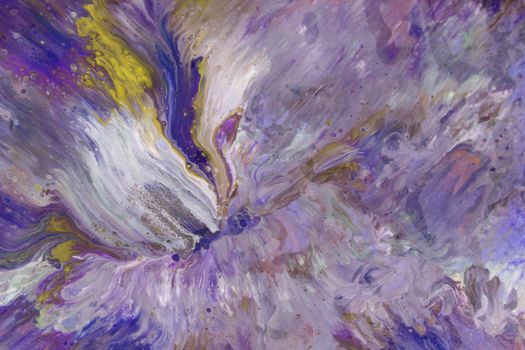 Photo: Landiva Weber / Pexels
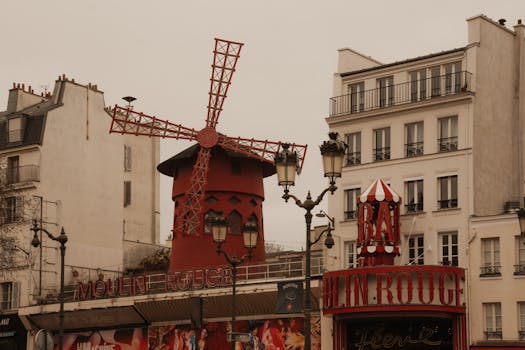 Photo: Liisbet Luup / Pexels