What Is Contemporary Art? A Modern Guide to Its Meaning

A collection of white sculptures on a red brick wall showcases artistic creativity outdoors.Photo: levan simonshvili / Pexels

What Is Contemporary Art? A Modern Guide to Its Meaning

Dive into the vibrant, often challenging world of contemporary art and discover its profound impact on culture and society.

Explore Contemporary Art

Key Takeaways

  • ✓ Contemporary art generally refers to art made from the 1960s/70s to the present day.
  • ✓ It often challenges traditional notions of art, beauty, and purpose.
  • ✓ Contemporary art is characterized by its diversity in materials, forms, and concepts.
  • ✓ Many contemporary artists engage with social, political, and cultural issues.

How It Works

1
Define the Timeline

Understand that 'contemporary' typically means 'of the moment' or 'from our time,' generally post-1960s. This helps differentiate it from 'modern art' which preceded it.

2
Recognize Key Characteristics

Look for art that might be experimental, uses unconventional materials, or questions established ideas. It's often about the concept as much as the aesthetic.

3
Engage with the Context

Consider the social, political, and technological backdrop against which the art was created. Contemporary art is deeply intertwined with current events and philosophical thought.

4
Embrace Subjectivity and Dialogue

Accept that there isn't always one 'right' interpretation. Contemporary art encourages personal reflection, critical thinking, and open discussion among viewers.

Defining the Era: When Does Contemporary Art Begin?
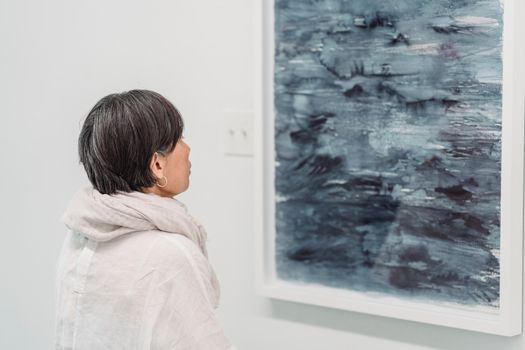
A woman looking at an abstract painting in a modern art gallery.Photo: Greta Hoffman / Pexels
To truly grasp what is contemporary art, we must first establish its temporal boundaries, a task that is often more fluid than one might expect. While 'contemporary' literally means 'of the moment,' in the context of art history, it generally refers to art produced from the latter half of the 20th century to the present day. This period typically kicks off around the 1960s or 1970s, following the conclusion of the Modern Art era. The transition isn't marked by a definitive date but rather by a shift in artistic philosophy, methodology, and societal context. Modern Art, spanning roughly from the 1860s to the 1960s, was characterized by a radical departure from traditional forms, a focus on abstraction, and a belief in progress and utopian ideals. Movements like Impressionism, Cubism, Surrealism, and Abstract Expressionism fall under this umbrella. However, as the world moved past the mid-century, artists began to question the very tenets of Modernism. The optimism of progress began to wane, replaced by a more critical, self-aware, and often skeptical perspective. This shift was fueled by significant global events, technological advancements, and evolving social structures. The rise of postmodern thought, which challenged grand narratives and universal truths, profoundly influenced the art world. Artists started to explore new mediums beyond painting and sculpture, incorporating performance, video, installation, and digital technologies. The focus moved from the 'masterpiece' to the 'experience' or 'concept.' This period also saw a decentralization of the art world, moving beyond the traditional Western European and North American hubs to embrace diverse voices and perspectives from around the globe. Understanding this historical progression is crucial because it highlights that contemporary art isn't just 'new art'; it's art that consciously engages with, critiques, or builds upon the artistic traditions that came before it, all while grappling with the complexities of its own time. It's a continuous, evolving dialogue between the past, present, and an imagined future, constantly redefining what art can be and what it means to be an artist in the modern world. For a deeper dive into earlier periods, explore the history of art movements.

Characteristics and Core Principles of Contemporary Art
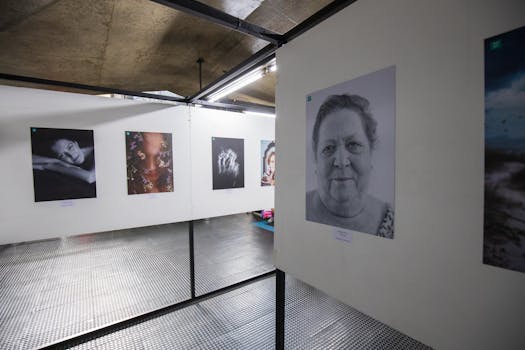
Interior view of an art gallery with portrait photographs on display.Photo: Matheus Bertelli / Pexels
Once we've situated contemporary art within its timeline, the next step in understanding what is contemporary art involves dissecting its defining characteristics and underlying principles. Unlike earlier periods that often adhered to specific styles or aesthetic conventions, contemporary art is remarkably diverse and resists easy categorization. Its primary hallmark is a profound embrace of experimentation and a willingness to challenge established norms. Artists are not bound by traditional mediums; they utilize everything from found objects and industrial materials to digital code, light, sound, and even living organisms. This expansion of materials directly reflects a broader conceptual shift: the idea often takes precedence over pure aesthetic beauty. Viewers are frequently asked to engage intellectually with a piece, to ponder its message, its context, and its implications, rather than simply admire its visual appeal. Engagement with social, political, and cultural issues is another cornerstone of contemporary art. Artists often act as commentators, critics, and provocateurs, addressing topics such as identity, globalization, environmentalism, human rights, technology's impact, and consumerism. They use their work to spark dialogue, raise awareness, and sometimes even instigate change. This engagement means that contemporary art can often be challenging, uncomfortable, or even controversial, as it confronts viewers with uncomfortable truths or perspectives they might not have considered. Furthermore, contemporary art frequently blurs the lines between different disciplines, incorporating elements of science, philosophy, literature, and even activism. It questions authorship, originality, and the very definition of art itself. Performance art, for instance, emphasizes the ephemeral experience, while installation art transforms entire spaces, immersing the viewer within the artwork. Relational aesthetics, a more recent development, focuses on the interactions and relationships fostered by the artwork, often involving audience participation. This pluralism, this lack of a single dominant style or ideology, is perhaps its most distinguishing feature. It reflects a world that is increasingly interconnected and complex, where multiple truths and perspectives coexist. Rather than seeking a singular, universal meaning, contemporary art invites individual interpretation and encourages a continuous process of questioning and discovery. It demands active participation from its audience, transforming passive observers into engaged co-creators of meaning. This emphasis on process, concept, and interaction makes the experience of contemporary art a dynamic and often transformative one, moving beyond mere visual appreciation to a deeper intellectual and emotional engagement.

Key Movements and Influences within Contemporary Art

Creative art installation with colored soda cans forming text on a wall.Photo: Alina Skazka / Pexels
Understanding what is contemporary art also necessitates an exploration of the various movements and intellectual currents that have shaped it since the latter half of the 20th century. While contemporary art is characterized by its lack of a single overarching style, several influential movements have emerged, each contributing unique perspectives and methodologies. Pop Art, arising in the 1950s and 60s, challenged the elitism of art by incorporating imagery from popular culture, advertising, and everyday objects, blurring the lines between high art and low culture. Artists like Andy Warhol and Roy Lichtenstein satirized consumerism and celebrity, making art accessible and often ironic. Following this, Minimalism stripped art down to its most essential forms, emphasizing geometric shapes, industrial materials, and a direct engagement with the exhibition space, pushing viewers to consider the object itself rather than symbolic meaning. Conceptual Art, perhaps one of the most radical shifts, prioritized the idea or concept behind the artwork over its visual execution. The artwork's physical manifestation became secondary, serving merely as documentation or an extension of the primary concept. This led to works that could be text-based, ephemeral, or even non-existent in a traditional sense, truly pushing the boundaries of what constitutes art. Performance Art, which gained prominence in the 1960s, used the artist's body as the medium, often exploring themes of identity, ritual, and social critique through live actions and interactions with an audience. This challenged the permanence of art and highlighted the importance of temporal experience. Postmodernism, an overarching philosophical and cultural movement, deeply influenced contemporary art by questioning grand narratives, universal truths, and established hierarchies. It embraced pastiche, appropriation, and irony, often re-contextualizing historical styles and images. This led to a diverse range of practices, from Neo-Expressionism to identity-based art, which explored gender, race, and sexuality. Installation Art transformed entire spaces into immersive environments, engaging multiple senses and often requiring the viewer's physical movement through the artwork. Digital Art and New Media Art, fueled by technological advancements, utilize computers, the internet, virtual reality, and artificial intelligence as creative tools, exploring new forms of expression and interaction. These movements are not isolated but often overlap and influence one another, creating a rich tapestry of artistic exploration. They demonstrate contemporary art's ongoing commitment to questioning, innovating, and reflecting the complex realities of our modern world. To learn more about how art reflects society, check out the sociological impact of art.

Navigating and Appreciating Contemporary Art: Tips for the Viewer
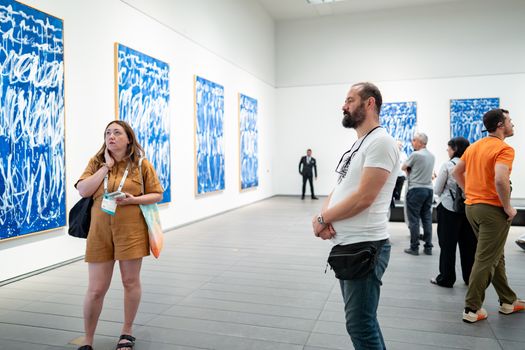
Visitors in an art gallery engaging with blue abstract artworks. Captured indoors with contemporary art, diverse visitors enhancing the scene.Photo: This And No Internet 25 / Pexels
Approaching what is contemporary art can sometimes feel daunting, especially for those accustomed to more traditional forms. However, with a few key strategies, anyone can learn to navigate and deeply appreciate its complexities. The first and most crucial tip is to let go of preconceived notions of what art 'should' be. Contemporary art often defies conventional beauty or narrative, asking you to reconsider your expectations. Instead of asking 'Is this beautiful?' try asking 'What is this trying to say?' or 'What questions does this raise?' This shift in perspective opens the door to intellectual and emotional engagement beyond purely aesthetic judgment. **Tips for Engaging with Contemporary Art:** * **Read the Wall Text:** Always start by reading the accompanying labels or descriptions. These often provide crucial context about the artist's intentions, the materials used, and the broader themes being addressed. This information can transform a seemingly abstract piece into a profound statement. * **Observe Actively:** Take your time. Look at the materials, the scale, the colors, the arrangement. How does the artwork interact with the space around it? Pay attention to details you might initially overlook. * **Consider the Context:** Think about the socio-political climate in which the art was created. What major events or ideas were prevalent? Contemporary art is often a direct response to its time. * **Embrace Subjectivity:** It's okay if you don't 'get it' immediately, or if your interpretation differs from others. Contemporary art often thrives on multiple readings and personal connections. Your emotional or intellectual response is valid. * **Ask Questions:** If you're in a gallery or museum, don't hesitate to ask a docent or staff member for more information. Engaging in dialogue can deepen your understanding. * **Research the Artist:** A quick search about the artist's background, previous works, and philosophical leanings can provide invaluable insights into their current piece. * **Visit Diverse Venues:** Explore not just major museums but also smaller galleries, artist-run spaces, and public art installations. This exposes you to a wider range of contemporary practices. * **Be Open to Discomfort:** Some contemporary art is designed to provoke, challenge, or even disturb. Allow yourself to feel these emotions and consider why the artist might be eliciting them. By adopting these approaches, you'll find that contemporary art is not just a collection of perplexing objects but a vibrant, dynamic field that reflects, critiques, and shapes our contemporary world, offering rich opportunities for reflection and discovery.

Comparison

FeatureContemporary ArtModern ArtClassical Art
Timeline1960s/70s - Present1860s - 1960sAntiquity - 18th Century
Primary FocusConcept, Experience, Social IssuesExperimentation, Abstraction, ProgressIdealized Beauty, Narrative, Tradition
MediumsDiverse (Video, Installation, Digital, Performance, Mixed Media)Oil Paint, Sculpture, PhotographyOil Paint, Fresco, Marble, Bronze
Audience RoleActive Interpretation, DialogueIntellectual Engagement, AppreciationAdmiration, Emotional Response
AestheticPluralistic, Often ChallengingOften Abstract, StylizedRepresentational, Harmonious
Key QuestionWhat is art's purpose now?How can art break tradition?How can art represent truth/beauty?

What Our Readers Say

5 ★★★★★

"This article finally clarified what contemporary art truly means! I used to feel intimidated by it, but now I understand it's about the questions it asks, not just the visuals. My gallery visits are so much more enriching."

5 ★★★★★

"As an aspiring artist, I needed a comprehensive guide to what is contemporary art. This piece broke down the movements and philosophies in a way that's both accessible and insightful. Highly recommend for anyone feeling lost in the modern art scene."

5 ★★★★★

"I always struggled with understanding post-1960s art. After reading this, I visited a contemporary museum and found myself appreciating installations and performance pieces I would have dismissed before. It truly changed my perspective."

4 ★★★★☆

"A very thorough explanation, though I wish there were more specific examples of contemporary artists mentioned within the sections. Still, the breakdown of characteristics and viewing tips was exceptionally helpful for a novice like me."

5 ★★★★★

"This article made contemporary art feel less like an exclusive club and more like an open invitation. The emphasis on dialogue and context rather than just 'liking' a piece is a game-changer for how I'll approach art from now on."

Frequently Asked Questions

What is the main difference between contemporary art and modern art?
The main difference lies in their timelines and philosophies. Modern art generally spans from the 1860s to the 1960s, focusing on breaking from tradition and exploring new aesthetic forms. Contemporary art, from the 1960s/70s to the present, often emphasizes concept, social commentary, and a broader range of mediums, challenging the very definition of art itself.
Why does contemporary art often seem so challenging or confusing?
Contemporary art can be challenging because it often prioritizes ideas and concepts over traditional aesthetics. It frequently engages with complex social or political issues, uses unconventional materials, and demands active interpretation from the viewer rather than passive appreciation. It's designed to provoke thought and discussion, not just visual pleasure.
How can I start to appreciate contemporary art if I don't 'get it'?
Start by reading the wall texts and artist statements to understand the context and intent. Focus on asking 'what is the artist trying to communicate?' rather than 'do I like it?'. Be open to new experiences, engage with the work on an intellectual level, and accept that your interpretation is valid. Visiting diverse exhibitions and doing a little research on artists can also be very helpful.
Is contemporary art more valuable than older art forms?
The value of art, whether financial or cultural, is complex and subjective. Contemporary art often commands high prices in the market due to demand, scarcity, and the artist's reputation, but its cultural value lies in its ability to reflect and comment on our current world. Older art forms hold immense historical and aesthetic value, contributing to our understanding of human creativity across millennia. Neither is inherently 'more valuable' than the other; they serve different purposes and resonate with different audiences.
Does contemporary art have a defined style?
No, one of the defining characteristics of contemporary art is its lack of a single, defined style. It is highly pluralistic, encompassing a vast array of styles, mediums, and approaches. This diversity reflects the complex and multifaceted nature of the contemporary world, allowing artists to explore an infinite number of themes and ideas without being confined to a particular aesthetic.
Who should engage with contemporary art?
Anyone interested in understanding the world around them, exploring new ideas, or challenging their perceptions should engage with contemporary art. It's for critical thinkers, cultural observers, and anyone open to experiencing art beyond traditional canvases. It offers a unique lens through which to view current events, social issues, and the human condition.
Is contemporary art just a passing trend or a lasting movement?
Contemporary art is not a single passing trend but rather an ongoing and evolving period in art history. While individual trends and movements within it come and go, the overarching approach of questioning, experimenting, and reflecting the present moment is a lasting characteristic. It's a continuous dialogue that adapts to new technologies, social changes, and philosophical shifts, ensuring its relevance for the foreseeable future.
How might technology continue to influence contemporary art?
Technology will undoubtedly continue to profoundly influence contemporary art. We can expect further integration of artificial intelligence, virtual and augmented reality, bio-art, and interactive digital experiences. Artists will push boundaries by using new tools to create immersive environments, explore data visualization, and address ethical questions surrounding technology's role in society, continually redefining artistic creation and engagement.

Understanding what is contemporary art is an ongoing journey of discovery and engagement. By embracing its diversity, questioning its purpose, and allowing yourself to connect with its concepts, you'll unlock a richer appreciation for the art of our time. Dive in, explore, and let contemporary art challenge and inspire your perspective on the world.

Topics: what is contemporary artmodern art explainedcontemporary art characteristicsart movements todayunderstanding contemporary art