
What is Contemporary Art? A Deep Dive for Modern Enthusiasts
what is contemporary art

What is Contemporary Art? A Deep Dive for Modern Enthusiasts

Explore the vibrant, challenging, and ever-evolving world of contemporary art and how it reflects our current society.

Begin Your Art Journey

Key Takeaways

  • ✓ Contemporary art generally refers to art produced from the 1960s or 1970s to the present day.
  • ✓ It is characterized by its diversity, often challenging traditional notions of art and beauty.
  • ✓ Contemporary art frequently engages with social, political, and cultural issues of its time.
  • ✓ It embraces a wide array of media, techniques, and concepts, often blurring the lines between disciplines.

How It Works

1
Define the Timeline

Understand that 'contemporary' typically means 'of the moment.' For art, this generally starts after Modern Art, around the 1960s-1970s, and continues to evolve with us.

2
Recognize Key Characteristics

Look for art that is experimental, diverse in media, conceptually driven, and often reflective of current societal issues. It prioritizes ideas over purely aesthetic beauty.

3
Engage with the Context

Contemporary art often requires understanding the artist's intent, the historical moment, and the cultural discussions it's participating in. Research and critical thinking are key.

4
Experience and Interpret

Visit galleries, museums, and art fairs. Allow yourself to react, question, and form your own interpretations, recognizing that there isn't always one 'correct' meaning.

Defining the Epoch: When Did Contemporary Art Begin?
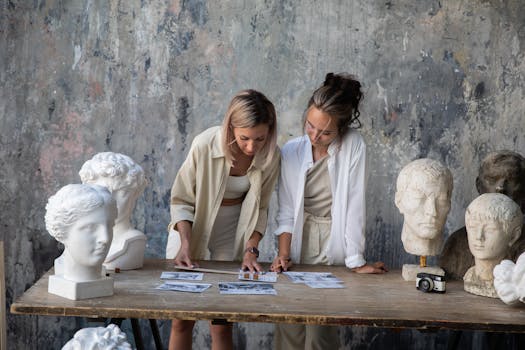
Two women study sculpture references in an art studio with sculpted busts. Photo: KATRIN BOLOVTSOVA / Pexels
The question of 'what is contemporary art' often begins with establishing its timeline. While there's no universally agreed-upon precise start date, contemporary art is generally understood to encompass art produced from the latter half of the 20th century to the present day. This typically places its inception somewhere in the 1960s or 1970s, following the conclusion of the Modern Art era. The distinction between modern and contemporary art is crucial yet frequently blurred for many art enthusiasts. Modern art, broadly speaking, spanned from the 1860s to the 1970s, characterized by a break from traditional forms and a focus on new ways of seeing and expressing, encompassing movements like Impressionism, Cubism, Surrealism, and Abstract Expressionism. Contemporary art, however, marks a further departure. It’s not just 'new' art; it’s art that directly engages with the contemporary world, its issues, its technologies, and its evolving philosophies. It signifies a period where artists moved beyond the foundational rebellions of modernism into a more fragmented, diverse, and often critically engaged practice. This shift wasn't a sudden, clean break but rather a gradual evolution, influenced by societal changes, technological advancements, and a growing global consciousness. The end of grand narratives and the rise of postmodern thought also played a significant role in shaping the contemporary art landscape. Understanding this historical context is the first step to truly grasping the essence of contemporary art. It helps us appreciate that it's not merely a style but an ongoing conversation, a reflection of our collective present, and a speculation on our future. The sheer breadth of contemporary art makes it challenging to categorize neatly, yet this very diversity is one of its defining strengths. It’s a field where artists are constantly pushing boundaries, questioning norms, and inviting viewers to reconsider their perspectives on art and life itself. To truly delve deeper into the rich tapestry of artistic movements, exploring the history of art history can provide invaluable context and understanding, allowing one to trace the lineage from ancient practices to the cutting-edge works of today.

Key Characteristics and Themes: What Makes it Contemporary?
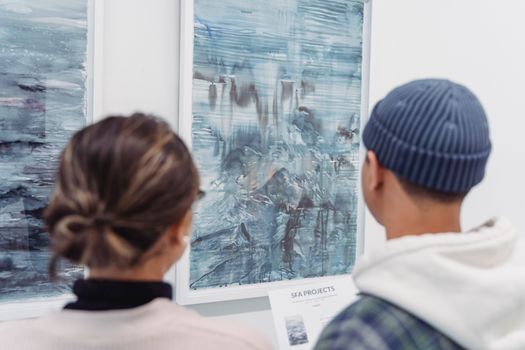
Visitors admire abstract paintings in an art gallery, showcasing modern artistic expressions. Photo: Greta Hoffman / Pexels
Beyond its timeline, what truly defines contemporary art are its distinctive characteristics and recurring themes. Unlike previous eras that often adhered to specific styles or schools of thought, contemporary art thrives on pluralism and eclecticism. There isn't one dominant style; instead, a multitude of approaches, media, and concepts coexist and often collide. Experimentation is paramount. Contemporary artists frequently push the boundaries of traditional media, incorporating new technologies, found objects, performance, video, installation, and digital art into their practice. The medium itself can become part of the message, challenging our preconceived notions of what constitutes 'art.' Concept often takes precedence over aesthetics. While beauty and skill are still valued, many contemporary works are primarily driven by an idea, a question, or a commentary. The intellectual engagement with the artwork can be as important, if not more important, than its visual appeal. This conceptual focus often requires the viewer to actively participate in interpreting the work, drawing on their own experiences and knowledge. Contemporary art is also deeply engaged with its socio-political context. Artists frequently address pressing global issues such as globalization, identity, gender, environmental concerns, consumerism, technology's impact, and social justice. They use their art as a platform for critique, advocacy, and reflection, often prompting viewers to confront uncomfortable truths or consider alternative perspectives. This engagement makes contemporary art a powerful mirror to our society, reflecting its anxieties, hopes, and complexities. Furthermore, contemporary art embraces diversity in artists themselves. There's a much greater emphasis on voices from marginalized communities, different cultures, and varied backgrounds, leading to a richer and more multifaceted artistic dialogue. This inclusivity challenges the historically Eurocentric and patriarchal narratives of art, opening up new avenues for expression and understanding. The interactive nature of much contemporary art, whether through performance, immersive installations, or digital platforms, also fosters a direct engagement that can be profoundly transformative for the audience.

Diverse Mediums and Revolutionary Approaches in Contemporary Art

One of the most thrilling aspects of contemporary art is its boundless embrace of diverse mediums and revolutionary approaches. Unlike earlier periods that largely focused on painting, sculpture, and drawing, contemporary artists have shattered these traditional confines, experimenting with virtually any material or method imaginable. This expansive toolkit allows for unparalleled freedom of expression and facilitates a deeper engagement with complex ideas. Installation art, for instance, transforms entire spaces into immersive experiences, challenging the viewer's perception of environment and art object. These can range from monumental structures to intimate, sensory-rich environments that invite interaction and contemplation. Performance art, another key contemporary medium, uses the artist's body, actions, and presence as the primary medium, often exploring themes of identity, ritual, and societal norms. These ephemeral works exist in the moment, making documentation and memory crucial parts of their legacy. Video art and digital art leverage technology to create moving images, interactive experiences, and virtual realities, pushing the boundaries of visual storytelling and challenging the static nature of traditional art. Artists might use animation, generative algorithms, or augmented reality to construct new worlds or critique our technologically saturated existence. Found objects and ready-mades, a concept pioneered in the early 20th century, continue to be central to contemporary practice. Artists appropriate everyday items, stripping them of their original function and recontextualizing them within an artistic framework, thereby questioning notions of value, authorship, and the very definition of art. This often leads to works that are provocative, humorous, or deeply philosophical. The blend of disciplines is also a hallmark. It’s not uncommon to find works that combine sculpture with sound, painting with projection, or performance with robotics. This interdisciplinary approach reflects the interconnectedness of our modern world and allows artists to create richer, more layered narratives. Understanding these varied mediums is essential to appreciate the full scope of what is contemporary art. It encourages us to look beyond conventional aesthetics and consider the artist's intent, the chosen materials, and the viewer's experience as integral components of the artwork. For those interested in exploring the foundational techniques and theories that paved the way for these contemporary innovations, a comprehensive understanding of art techniques can provide valuable insights into the evolution of artistic practice.

Engaging with Contemporary Art: Tips for the Curious Viewer

For many, contemporary art can feel intimidating or inaccessible. However, engaging with it can be an incredibly rewarding experience if approached with an open mind and a willingness to explore. Here are some tips to help you navigate and appreciate the diverse world of contemporary art: * **Drop Preconceptions:** Don't expect contemporary art to always be 'beautiful' in a traditional sense. It often prioritizes ideas, emotion, or social commentary over aesthetic perfection. Be open to challenging your own definitions of art. * **Read the Wall Text:** This is your best friend in a contemporary gallery. The accompanying text often provides crucial context about the artist's intent, the work's background, the materials used, and the themes being explored. It can unlock layers of meaning you might otherwise miss. * **Ask Questions:** Don't be afraid to wonder, 'Why is this art?' or 'What does this mean?' These questions are often precisely what the artist wants you to ask. Engage with your curiosity. * **Research the Artist and Context:** If a piece resonates (or confuses) you, make a note of the artist's name. A quick online search can reveal their broader body of work, influences, and philosophical underpinnings, enriching your understanding. * **Attend Talks and Tours:** Many museums and galleries offer guided tours, artist talks, and panel discussions. These provide direct access to insights from curators, art historians, and the artists themselves, offering invaluable perspectives. * **Visit Diverse Venues:** Don't limit yourself to major museums. Explore smaller independent galleries, artist-run spaces, and university art departments. These often showcase emerging artists and experimental works that push boundaries even further. * **Trust Your Instincts (and Discomfort):** It's okay to not like every piece, or even most pieces. Contemporary art is designed to provoke thought and emotion, and sometimes that emotion is discomfort or confusion. Embrace it as part of the experience. * **Consider the 'Why':** Instead of focusing solely on 'What is it?' or 'How was it made?', ponder 'Why was it made?' What message is the artist trying to convey? What societal issue are they addressing? This shifts the focus from purely visual appreciation to intellectual engagement. By adopting these strategies, you can transform your experience with contemporary art from passive observation to active engagement, unlocking a deeper appreciation for its complexity and relevance.

Comparison

FeatureContemporary ArtModern ArtTraditional Art
Time Period (Approx.)1960s/70s - Present1860s - 1970sPre-1860s
Key FocusConcept, Social Commentary, DiversityExperimentation, Break from TraditionRepresentation, Technical Skill
Media UsedAny & All (Video, Installation, Digital, etc.)Painting, Sculpture, CollagePainting, Sculpture, Drawing (conventional)
Viewer EngagementInteractive, Interpretive, CriticalObservational, Emotional, IntellectualAppreciative, Aesthetic
Dominant StylesPluralism, PostmodernismImpressionism, Cubism, Abstract Exp.Renaissance, Baroque, Romanticism

What Readers Say

"This article completely demystified what is contemporary art for me. I used to feel so lost in galleries, but now I have a framework to understand and appreciate the works."

Sarah J. · Brooklyn, NY

"As an aspiring artist, understanding the historical context and characteristics of contemporary art is crucial. This piece provided an excellent, in-depth overview that I'll keep coming back to."

Mark D. · Chicago, IL

"Before reading this, contemporary art felt inaccessible. Now, I feel equipped to visit a gallery, engage with the pieces, and even form my own informed opinions on what is contemporary art and its meaning."

Emily R. · Los Angeles, CA

"A very thorough explanation, though I still find some contemporary pieces challenging to connect with personally. The tips for engagement were particularly helpful in bridging that gap."

David L. · Austin, TX

"I'm a seasoned art collector, and even I found new insights here, especially regarding the nuanced distinctions between modern and what is contemporary art. A truly valuable resource!"

Jessica M. · Miami, FL

Frequently Asked Questions

What is the main difference between modern and contemporary art?

Modern art generally refers to art from the 1860s to the 1970s, characterized by a break from traditional forms and an exploration of new visual languages. Contemporary art, beginning roughly in the 1960s/70s, is art of the present moment, focusing more on concept, social commentary, and a vast diversity of media and approaches, often questioning the very definition of art itself. While modern art laid the groundwork for abstraction and experimentation, contemporary art builds on this by embracing pluralism and direct engagement with current global issues.

Why does some contemporary art seem 'weird' or 'not art' to me?

Contemporary art often challenges traditional notions of beauty, skill, and what art 'should' be. It frequently prioritizes ideas, social commentary, or the viewer's experience over purely aesthetic appeal. If something seems 'weird,' it might be intentionally provocative, pushing boundaries, or requiring a deeper understanding of its context and the artist's intent. Engaging with the wall text and considering the 'why' behind the piece can often illuminate its artistic value.

How can I start understanding and appreciating contemporary art?

Begin by visiting local contemporary art galleries and museums. Read the accompanying wall texts carefully to understand the artist's perspective and the work's context. Don't be afraid to ask questions or research artists whose work piques your interest. Attend artist talks or guided tours to gain deeper insights. Most importantly, approach it with an open mind, recognizing that personal interpretation and intellectual engagement are key components of the experience.

Is contemporary art a good investment?

Investing in contemporary art can be highly speculative and is not guaranteed to be profitable. While some contemporary artists achieve significant market success, many do not. Investment potential often depends on factors like the artist's recognition, critical acclaim, market trends, and provenance. For most, engaging with contemporary art should be driven by personal interest and appreciation rather than purely financial gain. If considering it as an investment, thorough research and expert advice are crucial.

How does contemporary art compare to street art or graffiti?

While street art and graffiti are often contemporary in their production and engagement with modern urban environments, they represent specific movements or genres within the broader umbrella of contemporary art. Many street artists are now recognized and exhibited in traditional gallery settings, blurring the lines. Contemporary art encompasses a far wider range of media and conceptual approaches, from performance and video to traditional painting, all engaging with the present cultural moment, whereas street art has a more specific public, often illicit, context and aesthetic.

Who are some influential contemporary artists to know?

The field of contemporary art is vast and diverse, but some highly influential artists include Jeff Koons, Yayoi Kusama, Ai Weiwei, Cindy Sherman, Kara Walker, Damien Hirst, Marina Abramović, Gerhard Richter, and Anish Kapoor. These artists represent a range of styles, mediums, and conceptual concerns that have significantly shaped the contemporary art landscape and continue to provoke discussion and inspire new generations.

Is contemporary art always political or socially conscious?

While a significant portion of contemporary art engages with political, social, and cultural issues, it is not always explicitly so. Many artists explore themes of identity, the human condition, technology, nature, spirituality, or purely aesthetic concerns. However, even seemingly abstract or personal works can carry underlying social or political implications, reflecting the artist's position within the contemporary world. The emphasis on individual expression means a wide spectrum of themes is explored.

What are the future trends in contemporary art?

Future trends in contemporary art are likely to continue exploring the intersection of art and technology, with increased use of AI, virtual reality, augmented reality, and blockchain (NFTs). Environmental art and art addressing climate change will likely grow in prominence. There will also be a continued emphasis on diverse voices, global perspectives, and interdisciplinary approaches, potentially blurring the lines further between art, science, and activism. The ephemeral and experiential nature of art may also become even more central.

Embark on your journey into the captivating world of what is contemporary art. With an open mind and these insights, you're ready to explore, question, and appreciate the art that defines our present and shapes our future. Start engaging with the art of today!

Topics: what is contemporary artcontemporary art definitionmodern art vs contemporary artcontemporary art characteristicsunderstanding contemporary art
Leo List
Brampton weed
Adultwork