✓ Surrealism emerged in the 1920s, primarily in Paris, from the Dada movement.
✓ Its core principle is to liberate the subconscious mind, often through dream imagery and automatism.
✓ André Breton's 'Manifesto of Surrealism' (1924) formally defined the movement's goals.
✓ Key figures include Salvador Dalí, René Magritte, Max Ernst, and Frida Kahlo.
How It Works
1
Understand the Precursors
Before diving into Surrealism, grasp the nihilistic and anti-establishment spirit of Dadaism, which laid much of its philosophical groundwork. This context is crucial for appreciating the surrealists' departure and evolution.
2
Explore André Breton's Manifesto
Read or familiarize yourself with the 1924 Manifesto of Surrealism. This foundational text outlines the movement's theoretical underpinnings, emphasizing psychic automatism and the exploration of the dream state.
3
Analyze Key Artworks
Engage with iconic surrealist pieces by artists like Dalí, Magritte, and Ernst. Pay attention to recurring motifs, juxtaposition of disparate elements, and the unsettling yet thought-provoking narratives they present.
4
Connect to Psychology and Philosophy
Recognize the profound influence of Freudian psychoanalysis and philosophical concepts on Surrealism. Understanding these intellectual currents enriches your interpretation of the art and its deeper meaning.
The Genesis of Surrealism: From Dada to Dreamscapes
Photo: Anni Roenkae / Pexels
To truly grasp the meaning of surrealism in art, one must first journey back to its tumultuous origins in the aftermath of World War I. The horrors of the war had shattered traditional beliefs and values, giving rise to movements that questioned rationality and societal norms. Dadaism, born in Zurich in 1916, was a direct response to this disillusionment. It was an anti-art movement, embracing absurdity, irrationality, and chance as a protest against the logic that had seemingly led to such widespread devastation. Dada artists sought to dismantle conventional art forms and challenge the very definition of art itself, often through provocative performances, collages, and readymades. Figures like Marcel Duchamp, Tristan Tzara, and Jean Arp were at the forefront of this radical rebellion. However, while Dada aimed to destroy, a faction within it yearned for something more – a constructive, albeit revolutionary, path forward. This is where André Breton, a former medical student and psychiatrist, enters the picture. Deeply influenced by Sigmund Freud's theories of the unconscious mind and dream analysis, Breton believed that the true wellspring of human creativity and insight lay beyond the confines of conscious thought. He saw the potential to tap into this hidden realm, to reconcile the seemingly contradictory states of dream and reality into an 'absolute reality' or 'surreality.'
In 1924, Breton published his seminal 'Manifesto of Surrealism,' formally launching the movement. He defined Surrealism as 'pure psychic automatism, by which one proposes to express, verbally, by means of the written word, or in any other manner, the actual functioning of thought. Dictated by thought, in the absence of any control exercised by reason, outside of all aesthetic and moral preoccupation.' This declaration marked a significant departure from Dada's nihilism. While retaining Dada's anti-bourgeois spirit and its rejection of rationalism, Surrealism sought to explore and liberate the subconscious rather than merely destroy. It was an ambitious project, aiming not just to create new art, but to revolutionize life itself, to change perception, and to unlock the hidden potential of the human mind. The early surrealists, including Max Ernst, Joan Miró, and Man Ray, experimented with techniques like automatic drawing and writing, frottage, and decalcomania to bypass conscious control and access the unconscious. They believed that by doing so, they could reveal profound truths about existence, desire, and the human condition that were otherwise suppressed by societal conventions and logical thought. This foundational shift from destruction to exploration is key to understanding the profound and lasting impact of surrealism on art and culture. It wasn't just a style; it was a philosophy, a way of seeing the world, and a method for unlocking new dimensions of reality.
Key Characteristics and Artistic Techniques of Surrealism
Photo: Steve A Johnson / Pexels
The meaning of surrealism in art is deeply embedded in its distinctive characteristics and the innovative techniques employed by its practitioners. At its core, Surrealism is about juxtaposing disparate elements in unexpected ways, creating a sense of dreamlike reality, and delving into the irrational. One of the most recognizable features is the use of dream imagery. Surrealist artists often drew inspiration directly from their dreams, or created scenes that evoked the illogical, unsettling, and symbolic nature of the dream world. This could manifest as distorted figures, impossible landscapes, or familiar objects placed in unfamiliar contexts, challenging the viewer's perception of reality. Salvador Dalí's melting clocks in 'The Persistence of Memory' are perhaps the most iconic example of this, transforming solid objects into fluid, ephemeral forms that defy the laws of physics and time.
Another crucial characteristic is automatism, a technique designed to bypass conscious control and allow the unconscious mind to express itself freely. This includes automatic drawing, where the artist draws without a preconceived idea, letting the hand move instinctively across the paper, and automatic writing, where words are written rapidly without conscious thought or editing. Max Ernst's frottage (rubbing a textured surface onto paper) and grattage (scraping paint from a canvas to reveal textures underneath) are other examples of automatic techniques that introduced elements of chance and unpredictability into the creative process. These methods were not just artistic tricks; they were philosophical tools for accessing the 'pure psychic automatism' that Breton championed.
Symbolism also plays a significant role, though it's often open to multiple interpretations. Surrealist symbols are rarely straightforward; instead, they are deeply personal, drawing from universal archetypes, Freudian psychology, and the artists' individual subconscious. René Magritte, for instance, frequently used everyday objects—apples, pipes, bowler hats—but rendered them in ways that questioned their identity and our perception of them, as seen in 'The Treachery of Images' ('Ceci n'est pas une pipe'). His work often creates a sense of paradox and mystery, inviting viewers to look beyond the obvious. The unsettling juxtaposition of ordinary objects in extraordinary settings, or the combination of human and non-human forms, creates a sense of the uncanny, a feeling of strangeness within the familiar. This deliberate disruption of logic and expectation is central to the surrealist aesthetic, aiming to provoke thought, challenge assumptions, and reveal the hidden dimensions of reality. It's this complex interplay of dream, automatism, symbolism, and juxtaposition that gives surrealist art its enduring power and its profound ability to resonate with our deepest, often unspoken, psychological landscapes.
Iconic Surrealist Artists and Their Enduring Legacies
Photo: Genaro Servín / Pexels
The meaning of surrealism in art is perhaps best illuminated through the groundbreaking works of its most celebrated practitioners. Each artist brought a unique vision and methodology to the movement, collectively shaping its diverse and profound legacy. Salvador Dalí is arguably the most famous surrealist, known for his flamboyant personality and meticulously rendered dreamscapes. His paranoiac-critical method, a technique of spontaneous irrational knowledge based upon the critical-interpretive association of delirious phenomena, allowed him to create highly detailed, hyper-realistic paintings of impossible scenarios. Works like 'The Persistence of Memory' (1931) with its melting clocks, and 'Swans Reflecting Elephants' (1937), exemplify his ability to transform the mundane into the extraordinary, blurring the lines between reality and hallucination. Dalí's commercial success and public persona brought Surrealism to a wider audience, though his eventual expulsion from the movement by Breton highlighted the internal ideological struggles.
René Magritte, a Belgian surrealist, took a more conceptual approach, often referred to as 'Magical Realism.' His paintings are characterized by their precise, realistic style combined with unsettling and paradoxical imagery. Magritte challenged viewers' perceptions of reality and language, frequently playing with the relationship between an object and its representation. 'The Treachery of Images' (1929), depicting a pipe with the caption 'Ceci n'est pas une pipe' (This is not a pipe), forces us to confront the nature of representation itself. His works often evoke a sense of mystery and intellectual provocation, inviting contemplation rather than emotional release. Max Ernst, a German artist, was a pioneer in applying automatic techniques to painting. He developed frottage and grattage, as well as decalcomania, which involved pressing painted surfaces together to create unpredictable textures and forms. His collages, such as 'Une Semaine de Bonté' (A Week of Kindness), juxtaposed images from Victorian novels and scientific illustrations to create disturbing and humorous narratives, revealing the unconscious anxieties of modern society. Ernst's innovative methods pushed the boundaries of artistic creation, demonstrating how chance and automatism could yield profound artistic results.
Beyond these titans, other artists made significant contributions. Joan Miró, though often associated with abstraction, created biomorphic forms and vibrant, playful compositions that explored the subconscious through a more lyrical and symbolic language. Frida Kahlo, while not formally a member of the Parisian Surrealist group, was embraced by Breton, who saw her self-portraits as inherently surreal. Her raw, intensely personal, and often disturbing depictions of pain, identity, and Mexican culture resonated deeply with surrealist themes of inner reality and psychological exploration. Her work, like 'The Two Fridas' (1939), transcended mere autobiography to become universal statements on human suffering and resilience. The enduring legacy of these artists lies not only in their individual masterpieces but in their collective success in expanding the very definition of art, pushing it beyond mere representation to explore the vast, uncharted territories of the human mind and its limitless capacity for imagination. Their influence continues to reverberate through contemporary art, literature, and popular culture, proving that the spirit of surrealism remains as potent and relevant as ever.
Understanding Surrealism's Impact and Common Misconceptions
Photo: K / Pexels
The meaning of surrealism in art extends far beyond its initial artistic output, permeating various aspects of culture and thought. Its profound impact can be seen in literature, film, fashion, and even psychology, demonstrating its revolutionary power to challenge conventional thinking. In literature, surrealist writers like Louis Aragon and Paul Éluard employed automatic writing to create poetry that defied logical structure, aiming to tap into a deeper, more authentic voice. Filmmakers such as Luis Buñuel and Salvador Dalí collaborated on iconic surrealist films like 'Un Chien Andalou' (An Andalusian Dog), which used jarring, illogical sequences to evoke dream states and provoke viewers. This influence is still visible in contemporary cinema, where dream logic and symbolic imagery are often used to explore complex psychological themes. Fashion designers have also drawn inspiration from surrealism, incorporating unexpected juxtapositions, trompe l'oeil effects, and whimsical elements into their collections, transforming clothing into wearable art that questions reality.
Despite its widespread influence, several common misconceptions surround Surrealism. One prevalent misunderstanding is that Surrealism is simply about painting strange or bizarre images. While surrealist art often appears strange, its primary goal is not merely to shock or be weird for its own sake. Instead, the strangeness serves a deeper purpose: to unlock the subconscious, to reveal hidden truths, and to challenge the viewer's perception of what is real and rational. The bizarre imagery is a tool, not the end goal. Another misconception is that Surrealism is synonymous with Salvador Dalí. While Dalí is undoubtedly one of its most famous proponents, he represents only one facet of a much broader and more diverse movement. As discussed, artists like Magritte, Ernst, Miró, and Kahlo each contributed distinct styles and philosophical approaches, demonstrating the rich tapestry of surrealist expression. Reducing Surrealism to a single artist or style diminishes its true scope and complexity.
Furthermore, some believe that Surrealism is purely about dreams and fantasy, disconnected from reality. On the contrary, Breton emphasized the reconciliation of dream and reality into a 'surreality' – a higher reality that encompasses both. Surrealists were deeply engaged with social and political issues, often using their art to critique bourgeois society, colonialism, and war. Their exploration of the unconscious was not an escape from reality, but a means to understand and ultimately transform it. For instance, many surrealists were involved in communist politics, believing that a revolution of the mind was necessary for a societal revolution. Understanding these nuances is crucial for appreciating the full depth and revolutionary spirit of Surrealism, recognizing it not just as an artistic style but as a powerful intellectual and cultural movement that sought to redefine human experience and perception. The movement's enduring relevance lies in its continuous invitation to question, to explore, and to embrace the irrational as a vital component of the human condition.
Comparison
Feature
Surrealism
Dadaism
Cubism
Primary Goal
Liberate the subconscious, create 'surreality'
Destroy traditional art, protest societal norms
Analyze and depict objects from multiple viewpoints
Key Influence
Freudian psychoanalysis, dreams
Anti-war sentiment, nihilism
African sculpture, Cézanne's geometry
Techniques
Automatism, juxtaposition, dream imagery
Chance, readymades, collage, performance
Geometric abstraction, multiple perspectives
Emotional Tone
Mysterious, unsettling, thought-provoking
Absurd, rebellious, satirical
Analytical, intellectual, fragmented
What Readers Say
★★★★★
"This article completely opened my eyes to the meaning of surrealism in art. I always thought it was just strange paintings, but now I understand the deep psychological and philosophical roots. It's truly revolutionary!"
Eleanor Vance · Brooklyn, NY
★★★★★
"As an art enthusiast, I found this explanation of surrealism incredibly thorough and insightful. The breakdown of key artists and techniques made complex ideas very accessible. A must-read for anyone interested in modern art."
Marcus Chen · San Francisco, CA
★★★★★
"I used this article for a research paper on art movements, and it provided such a clear and comprehensive understanding of the meaning of surrealism in art. My grade significantly improved thanks to the detailed historical context and artist analyses."
Sophia Rodriguez · Austin, TX
★★★★★
"While incredibly informative, I would have loved to see a bit more on how surrealism influenced advertising. Nevertheless, the core content on the meaning of surrealism in art was exceptional and well-structured, providing a solid foundation."
David Lee · Chicago, IL
★★★★★
"I'm a budding artist, and this article inspired me to experiment with automatism and dream imagery in my own work. Understanding the true meaning of surrealism in art has unlocked new creative avenues for me."
Chloe Adams · Miami, FL
Frequently Asked Questions
What is the primary meaning of surrealism in art?
The primary meaning of surrealism in art is to liberate the subconscious mind, exploring dreams, irrationality, and the hidden depths of human experience to create a 'surreality' – a higher reality that reconciles dream and waking life. It aims to challenge conventional logic and societal norms through artistic expression.
Is surrealism just about painting strange things?
No, surrealism is much more than just painting strange things. While it often features bizarre or illogical imagery, this is a means to an end. The strangeness serves to bypass rational thought, provoke deeper psychological insights, and reveal truths about the unconscious mind, rather than simply being weird for shock value.
How can I identify a surrealist artwork?
You can identify a surrealist artwork by looking for common characteristics such as dreamlike imagery, unexpected juxtapositions of ordinary objects, distorted figures or landscapes, a sense of mystery or paradox, and often a meticulous, realistic painting style applied to impossible scenes. Techniques like automatism were also central to its creation.
What was the cost or value of surrealism to the art world?
The value of surrealism to the art world is immeasurable. It revolutionized artistic thought by emphasizing the unconscious, expanding the definition of art beyond mere representation, and influencing countless subsequent movements and cultural forms. Its impact on psychology, literature, and film also demonstrates its profound and lasting worth.
How does surrealism compare to Dadaism?
Surrealism emerged from Dadaism but diverged significantly. Dadaism was an anti-art movement focused on destruction and protest against rationality, using absurdity and chance. Surrealism, while sharing Dada's anti-establishment spirit, aimed to build something new by exploring and liberating the subconscious, seeking a 'surreality' rather than just dismantling norms.
Who should study the meaning of surrealism in art?
Anyone interested in art history, psychology, philosophy, or creative expression should study the meaning of surrealism in art. It offers deep insights into the human mind, challenges conventional thinking, and provides a rich understanding of how art can be a vehicle for profound cultural and personal exploration.
Are there any risks in interpreting surrealist art?
The primary 'risk' in interpreting surrealist art is over-intellectualizing or trying to find a single, definitive meaning. Surrealism often embraces ambiguity and open interpretation, reflecting the fluid nature of the unconscious. The goal is often to provoke thought and feeling, rather than to convey a clear, singular message.
What is the future trend for surrealism's influence?
Surrealism's influence continues to evolve and remain relevant. In a world increasingly saturated with digital imagery and virtual realities, its exploration of altered perceptions, dream logic, and the uncanny finds new resonance. Expect to see its themes and techniques continue to inspire digital artists, filmmakers, and creators pushing the boundaries of reality and imagination.
Embark on your own journey into the subconscious. By understanding the profound meaning of surrealism in art, you gain a new lens through which to view not just art, but the very fabric of reality and the boundless potential of the human mind. Let the dreamscapes inspire your waking life.

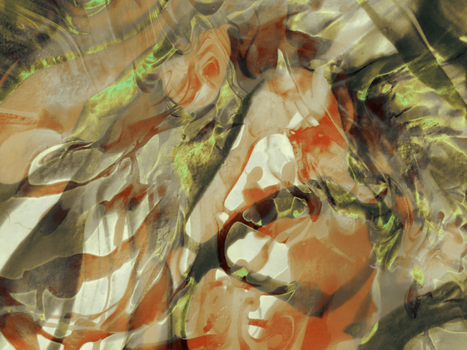 Photo: Anni Roenkae / Pexels
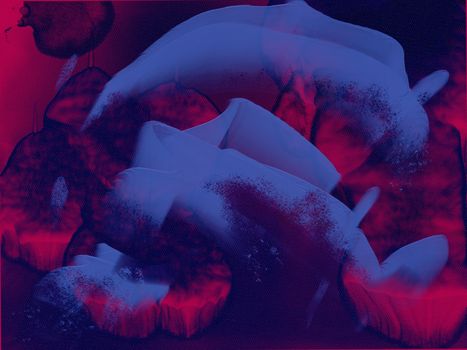 Photo: Steve A Johnson / Pexels
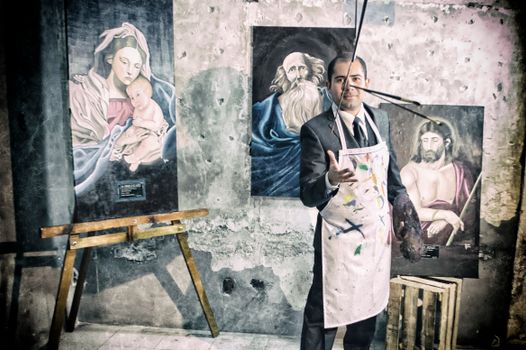 Photo: Genaro Servín / Pexels
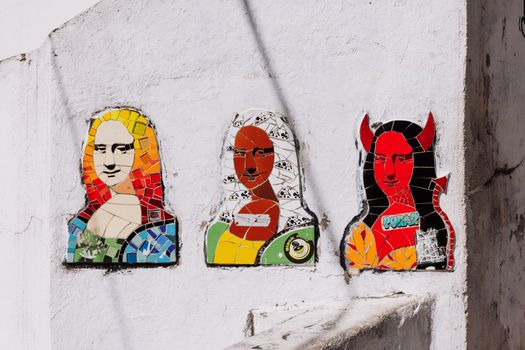 Photo: K / Pexels