Unleash Your Inner Artist: How to Start Painting for Beginners
June 23, 2026 15 min read 3,097 words
Embark on your creative adventure today with this ultimate guide to beginning your painting journey.
Start Painting Now
Demystifying Painting Supplies for Beginners
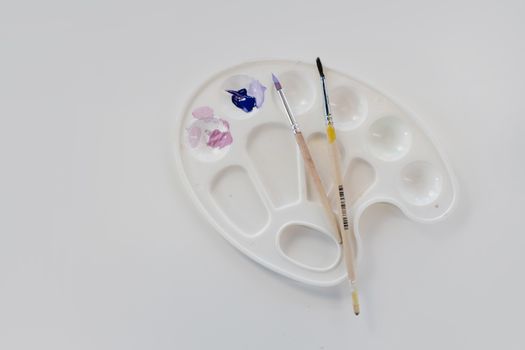 Photo: cottonbro studio / Pexels
Embarking on your painting journey doesn't require a hefty investment in professional-grade art supplies. In fact, one of the most common misconceptions that deter aspiring artists is the belief that they need expensive tools to create meaningful art. The truth is, starting with a few essential, budget-friendly items can get you well on your way. For beginners, the focus should be on understanding the fundamentals and experimenting with different mediums without breaking the bank. Let's break down the core supplies you'll need.
First and foremost, you'll need paint. Acrylics are overwhelmingly recommended for beginners, and for good reason. They are water-soluble, meaning easy cleanup with just soap and water, and they dry relatively quickly, which allows for faster layering and reduces the chance of accidental smudges. Unlike oils, they don't require harsh solvents, making them safer and more pleasant to work with in a home environment. A basic starter set of acrylics typically includes primary colors (red, blue, yellow), black, and white. With these five colors, you can mix an incredible array of hues, which is an excellent way to start understanding color theory without being overwhelmed by too many tubes. You can find decent quality student-grade acrylics at most art or craft stores for a very reasonable price. Remember, you don't need artist-grade paints initially; student-grade will suffice for learning and practice.
Next up are brushes. Just like paints, you don't need a vast collection. A small set of synthetic brushes in various shapes and sizes will serve you well. Look for a set that includes a flat brush (for broad strokes and edges), a round brush (for lines and details), and maybe a filbert or bright brush. Synthetic brushes are durable, versatile, and work well with acrylics. Avoid natural hair brushes for acrylics as they can be harder to clean and maintain with this medium. Again, student-grade brush sets are perfect for getting started. You'll also need a surface to paint on. Canvas panels or stretched canvases are popular choices, but for initial practice, consider using canvas paper, thick watercolor paper, or even cardboard primed with gesso. Gesso is a primer that prepares your surface, making it less absorbent and providing a better texture for paint adherence. It's an inexpensive item that can make a big difference in your painting experience. A palette for mixing colors is also essential. This can be as simple as a ceramic plate, a plastic lid, or a dedicated palette from the art store. The key is to have a non-absorbent, easy-to-clean surface. Lastly, don't forget a water container for rinsing brushes (an old jar or plastic cup works perfectly) and some paper towels or an old rag for wiping brushes. These seemingly minor items are crucial for maintaining your tools and keeping your workspace tidy. By starting with these basic, affordable supplies, you can confidently dive into painting without feeling overwhelmed or burdened by cost. As you progress, you'll naturally discover which tools you prefer and what specific items you might want to invest in further. The journey of
artistic expression is all about experimentation and discovery.
Mastering Fundamental Painting Techniques
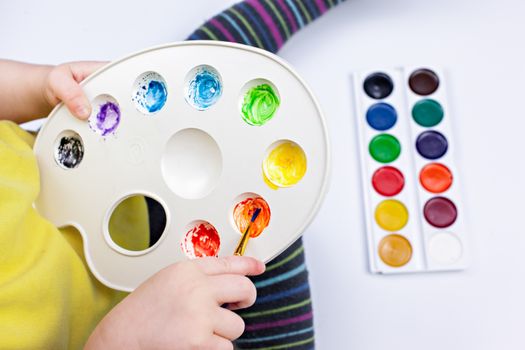 Photo: Julia Filirovska / Pexels
Once you have your basic supplies, the next exciting step is to dive into the fundamental techniques that will form the bedrock of your painting skills. Don't feel pressured to create masterpieces from day one; the goal here is to understand how your materials behave and to gain control over your brush and paint. Think of these as building blocks that will enable you to express your vision more effectively as you progress.
One of the first techniques to explore is basic brushwork. Experiment with holding your brush in different ways – closer to the ferrule (the metal part) for more control and detail, or further back on the handle for looser, broader strokes. Practice making different types of lines: thin, thick, long, short, wavy, and straight. Try varying the pressure you apply to the brush to see how it affects the stroke. This simple exercise helps you develop muscle memory and control. Next, explore flat washes and gradients. A flat wash is an even layer of a single color, while a gradient transitions smoothly from one color to another, or from a dark shade to a light one. These are crucial for creating backgrounds, skies, and adding depth to your paintings. For a flat wash, load your brush with a consistent amount of paint and apply it evenly across the surface. For a gradient, start with one color, then gradually introduce another color on your brush, blending them on your palette or directly on your canvas. Practice blending two colors seamlessly, then try three or more.
Color mixing is perhaps the most magical and intimidating aspect for many beginners. However, it's also one of the most rewarding. Start with your primary colors (red, blue, yellow) and mix them to create secondary colors (orange, green, purple). Then, experiment with mixing primary and secondary colors to create tertiary colors. Don't forget the importance of white and black. White will lighten colors, creating tints, while black will darken them, creating shades. Be cautious with black, as it can sometimes make colors look muddy; often, mixing a very dark version of a color (e.g., dark blue and dark brown to make a deep, rich black) yields better results. Understanding basic color theory – warm vs. cool colors, complementary colors, and analogous colors – will dramatically improve your ability to create harmonious and impactful paintings. There are many online resources and books dedicated to color theory that can provide deeper insights.
Layering is another fundamental technique, especially with acrylics. Because acrylics dry quickly, you can apply multiple layers of paint without disturbing the previous ones. This allows you to build up opacity, create depth, and refine details. Start by laying down a base layer, or 'underpainting,' often a thinned-out version of your main colors or a neutral tone. Once dry, you can add subsequent layers, gradually adding more detail and vibrancy. Experiment with both opaque layering (applying thick, solid coats of paint) and glazing (applying thin, translucent layers to build up color and luminosity). Lastly, don't shy away from experimentation. Try different brushstrokes, use a palette knife for texture, or dilute your paints with water to create watercolor-like effects. The more you play and explore, the more you'll understand the capabilities of your materials and develop your unique artistic voice. Remember, every stroke is a learning opportunity, and there are no 'mistakes,' only opportunities for discovery. Embrace the process and enjoy the journey of learning these foundational
art techniques.
Embarking on Your First Painting Projects
 Photo: Monika Szypuła-Bilska / Pexels
With your supplies ready and a basic understanding of techniques, the most exciting part begins: creating your first painting projects! This is where theory translates into practice, and you start seeing your efforts come to life on canvas. The key here is to choose simple, achievable projects that build confidence rather than overwhelming you. Don't aim for a museum-worthy masterpiece on your first try; instead, focus on enjoying the process and applying the techniques you've learned.
Start with simple subjects. Abstract shapes, color swatches, or even just practicing blending colors on a small canvas can be a great first 'project.' These exercises allow you to focus purely on brush control and color mixing without the pressure of rendering a recognizable object. Once you feel a bit more comfortable, consider painting something from a reference photo. A good starting point could be a simple landscape with a clear horizon line, a single piece of fruit, or a basic still life with one or two objects. Look for images with clear forms and distinct light and shadow areas, but not too much intricate detail. The goal is to simplify what you see into basic shapes and colors. For instance, if you're painting an apple, break it down into a sphere, consider where the light hits it, and identify the core colors and shadows. Don't try to capture every tiny nuance; focus on the overall form and color.
Another excellent approach for beginners is to copy a simple painting from a tutorial or a master artist. Many online platforms offer step-by-step guides for beginner-friendly paintings. This allows you to follow along, learn about composition, and observe how others approach different elements. It's not about plagiarism but about learning by imitation, much like how musicians learn by playing cover songs. You'll gain insights into layering, color choices, and brushwork that you might not discover on your own initially. As you follow these tutorials, try to understand *why* certain steps are taken, rather than just mindlessly copying. This deeper understanding will be invaluable when you start creating your own original works.
Don't be afraid to make mistakes. In painting, there are very few irreversible errors, especially with acrylics. If you don't like a section, wait for it to dry and paint over it. If you're completely unhappy with a piece, it's not a failure; it's a learning experience. Every stroke, every color choice, and every attempt teaches you something new about your materials, your preferences, and your artistic voice. Keep a sketchbook or a dedicated notebook where you can jot down observations, experiment with color swatches, and plan your paintings. This can be a valuable tool for tracking your progress and brainstorming ideas. Remember, the journey of learning
how to paint is a marathon, not a sprint. Celebrate small victories, be patient with yourself, and most importantly, enjoy the creative process. Your first paintings might not be perfect, but they will be uniquely yours, marking the beginning of a fulfilling artistic adventure.
Common Pitfalls and How to Overcome Them
As you embark on your painting journey, it's natural to encounter challenges and make mistakes. Recognizing these common pitfalls early on can help you navigate them more effectively and maintain your enthusiasm for painting. Understanding that these are part of the learning process, not indicators of a lack of talent, is crucial for growth.
Here are some common mistakes beginners make and how to overcome them:
* **Over-mixing colors:** A common temptation is to over-mix paints on the palette, resulting in muddy or dull colors. This often happens when trying to achieve a perfectly smooth blend. Instead, aim for slightly imperfect mixing. Let the colors swirl together without becoming entirely uniform. This creates more vibrant and interesting variations in your painting. When blending on the canvas, use gentle strokes and avoid scrubbing back and forth too much.
* **Using too much or too little water:** Acrylics can be thinned with water, but finding the right balance is key. Too much water will make the paint thin, transparent, and potentially cause it to lose its binding properties, leading to a watery, uneven application. Too little water, and the paint can be thick, difficult to spread, and prone to clumping. Experiment on a scrap piece of paper or canvas to find the consistency you prefer for different techniques – from thin washes to thick impasto.
* **Not cleaning brushes properly:** Dried paint in the ferrule (the metal part) of your brush can quickly ruin it, causing the bristles to splay and lose their shape. Always rinse your brushes thoroughly with water immediately after use and gently reshape them before letting them dry. A mild soap can help remove stubborn paint. Proper brush care extends the life of your tools and ensures a better painting experience.
* **Being afraid to make mistakes:** Many beginners are paralyzed by the fear of 'ruining' a painting. This fear stifles experimentation and creativity. Remember, paint is forgiving, especially acrylics. You can often paint over areas you don't like once they're dry. Embrace mistakes as learning opportunities. Sometimes, a 'mistake' can lead to an unexpected and beautiful discovery. Let go of the need for perfection and focus on the process of creation.
* **Starting with overly complex subjects:** Trying to paint an intricate portrait or a detailed city scene on your first attempt can quickly lead to frustration. As discussed earlier, begin with simple subjects – a single fruit, a basic landscape, or geometric shapes. Gradually increase the complexity as your skills and confidence grow. Break down complex subjects into simpler shapes and colors.
* **Ignoring reference images or working solely from imagination:** While painting from imagination is a wonderful goal, for beginners, using reference images is invaluable. They provide guidance on form, color, light, and shadow, helping you understand how things look in the real world. You don't have to copy them exactly, but they serve as a crucial learning tool. Over time, you'll build a visual library that makes imaginative painting easier.
* **Not taking breaks:** Painting requires focus, and it's easy to get lost in the work. However, staring at a painting for too long can make it difficult to see flaws or areas that need improvement. Step back from your work regularly – even for a few minutes. Look at it from a distance, or even take a photo (which can reveal issues you might not notice in person). Fresh eyes can offer new perspectives and help you identify areas for refinement.
