Unveiling the History of Renaissance Art: A Masterpiece

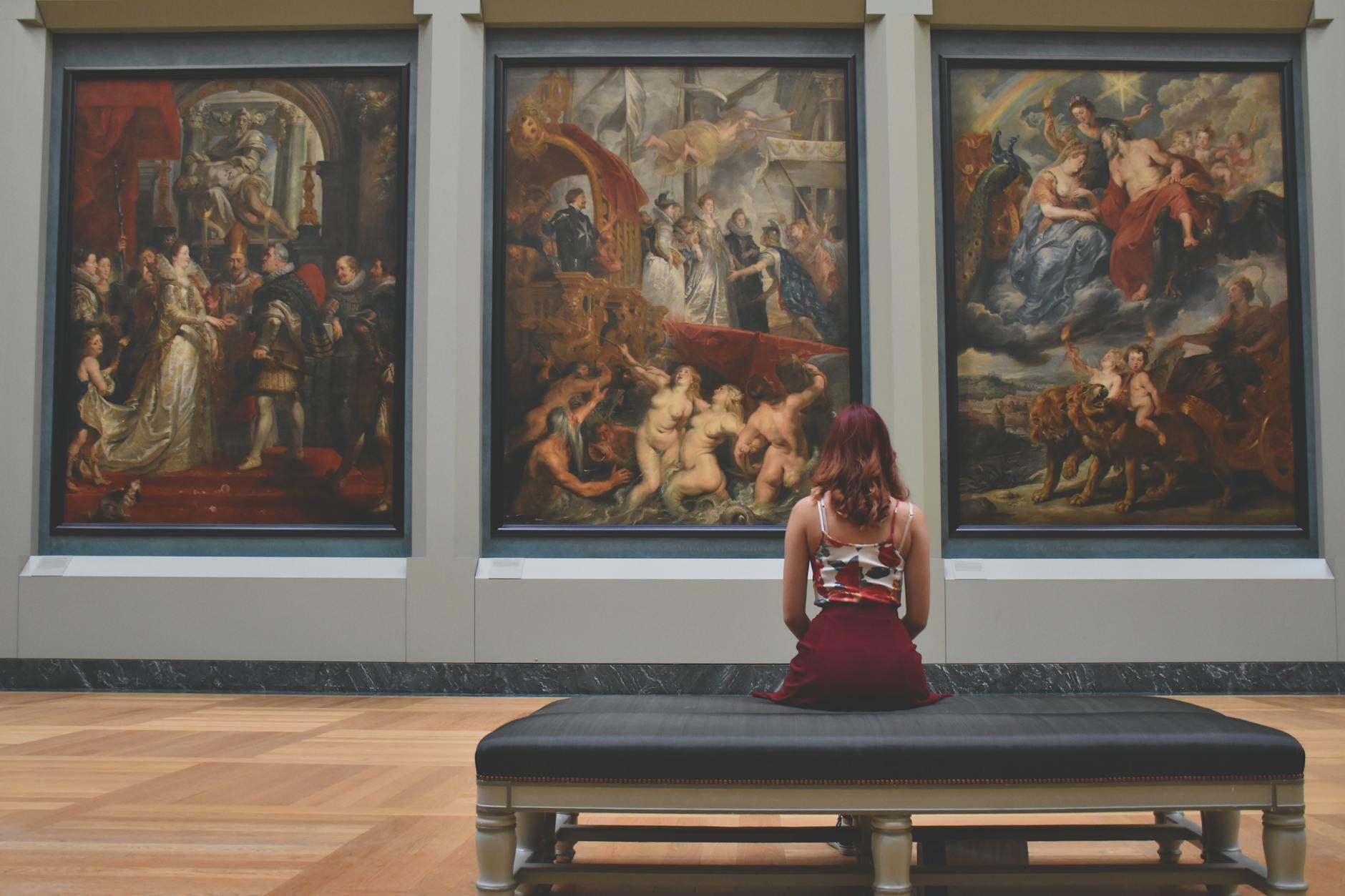
A woman observes classic paintings in an elegant museum gallery.Photo: Una Laurencic / Pexels

Unveiling the History of Renaissance Art: A Masterpiece

Journey through the revolutionary period that redefined art, culture, and human understanding, leaving an indelible mark on history.

Begin Your Art Journey

Key Takeaways

  • ✓ The Renaissance originated in Florence, Italy, around the 14th century.
  • ✓ Key innovations included linear perspective, chiaroscuro, and sfumato.
  • ✓ Major patrons like the Medici family fueled artistic production.
  • ✓ Humanism, a focus on human potential, profoundly influenced Renaissance art.

How It Works

1
Explore the Roots of Innovation

Understand how the intellectual and social climate of late medieval Italy laid the groundwork for this artistic explosion. Discover the initial shifts from Gothic traditions.

2
Meet the Trailblazers

Learn about the pioneering artists like Giotto and Masaccio who first broke away from established norms. See how their daring approaches set new standards for realism and depth.

3
Delve into the Golden Age

Immerse yourself in the High Renaissance, the peak of artistic achievement with masters like Leonardo, Michelangelo, and Raphael. Analyze their iconic works and the techniques that made them legendary.

4
Understand Its Enduring Legacy

Grasp how Renaissance art influenced subsequent movements and continues to shape our understanding of beauty and human potential. Reflect on its lasting impact on Western civilization.

The Genesis of a Revolution: Early Renaissance Art
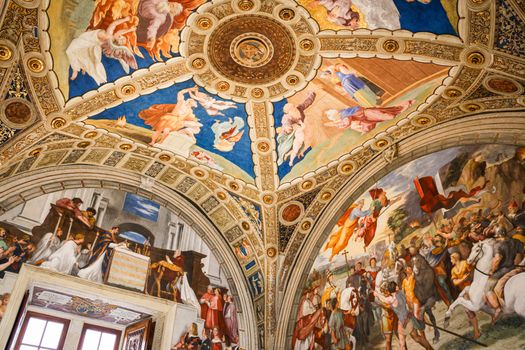
Intricate Renaissance frescoes adorn a grand ceiling, showcasing historical artistry.Photo: Magda Ehlers / Pexels
The history of Renaissance art begins not with a sudden burst, but with a gradual, yet profound, shift in perception and artistic methodology that took root in 14th-century Italy, particularly in Florence. This period, often termed the Proto-Renaissance or Early Renaissance, laid the essential groundwork for the artistic explosion that would follow. Before the Renaissance, European art was largely dominated by the Byzantine and Gothic styles, characterized by flat, symbolic figures, gold backgrounds, and a focus on spiritual rather than earthly realities. However, nascent humanistic ideas, which emphasized human potential and achievement, began to challenge this worldview. Artists like Giotto di Bondone (c. 1267–1337) are often credited as the earliest pioneers, breaking away from the rigid conventions of Byzantine art. Giotto introduced a revolutionary sense of naturalism and emotional depth to his frescoes, most notably in the Scrovegni Chapel in Padua. His figures possessed weight, volume, and a compelling psychological realism that had been absent for centuries. He experimented with rudimentary forms of perspective, creating a more convincing illusion of space. The 15th century, the Quattrocento, witnessed the flourishing of the Early Renaissance. Filippo Brunelleschi (1377–1446), an architect, is famously credited with formalizing linear perspective, a mathematical system for representing three-dimensional space on a two-dimensional surface. This invention was nothing short of revolutionary, providing artists with a powerful tool to create incredibly realistic and immersive scenes. Masaccio (1401–1428), though his career was tragically short, became the master of this new technique in painting. His fresco, 'The Holy Trinity' in Santa Maria Novella, Florence, is a breathtaking demonstration of linear perspective, creating the illusion of a chapel receding into the wall. Masaccio’s figures also possessed an unprecedented sense of monumental dignity and psychological depth, moving beyond Giotto’s pioneering efforts. Sculpture also experienced a dramatic revival during this time. Donatello (c. 1386–1466) emerged as a leading figure, reintroducing classical forms and a profound understanding of human anatomy. His bronze 'David' (c. 1440s) was the first free-standing nude sculpture since antiquity, embodying the Renaissance's renewed interest in classical ideals and the human form. This period also saw the rise of powerful patrons, such as the Medici family in Florence, whose wealth and influence provided crucial support for artists, allowing them to experiment and innovate. These patrons commissioned grand works, fostering a competitive and fertile environment for artistic development. The shift from anonymous guild work to individual artistic genius began to take shape, with artists gaining recognition and status. The focus expanded beyond purely religious themes to include classical mythology, portraiture, and historical narratives, reflecting a broader intellectual curiosity and a celebration of human endeavor. The Early Renaissance, therefore, was a period of intense experimentation and foundational discoveries, setting the stage for the unparalleled achievements of the High Renaissance. Its innovations in perspective, naturalism, and humanistic expression forever altered the trajectory of Western arts.

The Apex of Achievement: High Renaissance Masters and Techniques

The High Renaissance, spanning roughly from the late 1490s to the 1520s, represents the zenith of Renaissance art, a period of unparalleled artistic genius and profound cultural impact. Centered primarily in Rome and Florence, this era produced some of the most iconic works and revered artists in Western history. Three figures stand preeminent: Leonardo da Vinci, Michelangelo Buonarroti, and Raphael Sanzio, often referred to as the 'Big Three' of the High Renaissance. Their collective contributions synthesized the innovations of the Early Renaissance, refining techniques and elevating artistic expression to new heights of perfection. Leonardo da Vinci (1452–1519) epitomized the 'Renaissance man' – a polymath with insatiable curiosity across science, engineering, and art. In painting, he mastered *sfumato*, a technique involving subtle gradations of light and shadow, creating soft, hazy outlines and a sense of atmospheric depth. His most famous works, 'Mona Lisa' and 'The Last Supper,' exemplify his psychological insight, emotional nuance, and innovative compositional skills. The 'Mona Lisa' (c. 1503–1519) is renowned for its enigmatic smile, achieved through Leonardo's masterful use of sfumato around the eyes and mouth, inviting endless interpretation. 'The Last Supper' (c. 1495–1498) is a monumental fresco that captures the dramatic moment Christ announces his betrayal, with each apostle’s reaction meticulously rendered to convey a spectrum of human emotion. Leonardo's meticulous anatomical studies also informed the realism and vitality of his figures. Michelangelo Buonarroti (1475–1564), though a skilled painter and architect, considered himself primarily a sculptor. His monumental works embody the High Renaissance's grand scale and emotional intensity. His 'David' (1501–1504), carved from a single block of marble, is a powerful embodiment of human strength and ideal beauty, surpassing Donatello's earlier version in its heroic scale and dynamic pose. Michelangelo’s frescoes on the Sistine Chapel ceiling (1508–1512), particularly 'The Creation of Adam,' are masterpieces of narrative art, combining monumental figures with dramatic compositions and vibrant color. The sheer physical and intellectual demands of painting such a vast ceiling, often lying on his back, underscore his unparalleled dedication. His 'Pietà' (1498–1499), carved when he was just 24, displays an exquisite tenderness and mastery of drapery and human form, capturing the profound sorrow of Mary cradling the dead Christ. Raphael Sanzio (1483–1520) is celebrated for the clarity, harmony, and grace of his compositions. He synthesized the expressive power of Leonardo and the monumental grandeur of Michelangelo, creating a distinctive style known for its serene beauty and balanced forms. His 'School of Athens' (c. 1509–1511) in the Vatican's Stanze della Segnatura is a quintessential High Renaissance fresco, depicting an idealized gathering of ancient philosophers and scientists, with Plato and Aristotle at its center. The composition is a marvel of linear perspective, balance, and classical dignity, celebrating the pursuit of knowledge and intellectual discourse. Raphael's Madonnas, like the 'Sistine Madonna,' are renowned for their tender humanity and idealized beauty. The High Renaissance perfected techniques such as *chiaroscuro* (the use of strong contrasts between light and dark, usually bold contrasts affecting a whole composition) to create dramatic effects and a sense of three-dimensionality, and refined *contrapposto* (a naturalistic pose where a figure rests its weight on one leg, creating a dynamic S-curve in the body) in sculpture. This period represented a harmonious blend of classical ideals, technical mastery, and profound human expression, setting an impossibly high standard for future generations of artists.

Beyond the Golden Age: Late Renaissance, Mannerism, and Lasting Impact

As the High Renaissance began to wane in the 1520s, a new artistic style emerged, often seen as a bridge between the Renaissance and the Baroque: Mannerism. This period, roughly from 1520 to 1600, marked a departure from the harmonious balance and naturalism that characterized the High Renaissance. Mannerist artists, having seen the 'perfection' achieved by the likes of Leonardo, Michelangelo, and Raphael, sought to express themselves through more artificial, elegant, and often exaggerated forms. Rather than striving for naturalistic representation, they embraced complexity, elongated figures, unconventional poses, and often jarring color palettes. The aim was to create art that was sophisticated, intellectual, and self-consciously stylish, sometimes at the expense of clarity or emotional directness. Key Mannerist artists include Parmigianino, whose 'Madonna with the Long Neck' (c. 1534–1540) exemplifies the style's characteristic elongation and elegant distortion, and Pontormo, known for his vibrant and emotionally intense works like 'The Deposition from the Cross' (1525–1528), which features swirling compositions and unnaturally bright colors. El Greco, though working primarily in Spain, is often associated with Mannerism due to his dramatic use of light, elongated figures, and intense spiritual expression. The sack of Rome in 1527 and the Protestant Reformation also contributed to a more anxious and introspective mood that found expression in the Mannerist style, moving away from the confident humanism of the earlier Renaissance. The Renaissance's profound impact extended far beyond its immediate temporal boundaries and geographical origins. It fundamentally reshaped the understanding of art's purpose, the artist's role, and the very nature of human potential. The innovations in linear perspective, chiaroscuro, and sfumato became foundational techniques taught in academies for centuries. The renewed interest in classical antiquity provided a rich source of inspiration for subsequent generations of artists, architects, and thinkers. The concept of the artist as an intellectual and a genius, rather than merely a skilled craftsman, was cemented during this era. The detailed study of human anatomy, pioneered by artists like Leonardo, advanced both scientific understanding and artistic realism. Furthermore, the Renaissance's humanistic philosophy, which celebrated individual achievement and rational inquiry, laid much of the groundwork for the Enlightenment and modern Western thought. The emphasis on individual portraiture, for instance, reflected a growing appreciation for individual identity. The influence of Renaissance art can be seen throughout subsequent periods, from the dramatic grandeur of the Baroque to the refined elegance of Neoclassicism, and even in the academic traditions of the 19th century. Its masterpieces continue to be studied, admired, and serve as benchmarks for artistic excellence. Museums worldwide proudly display Renaissance works, attracting millions of visitors who come to marvel at the enduring beauty and intellectual depth of this transformative period. The history of Renaissance art is not just a chronological account of styles and artists; it is a testament to the enduring power of human creativity, innovation, and the relentless pursuit of beauty and understanding. Its legacy is woven into the very fabric of Western culture, continuing to inspire and challenge artists and audiences alike. Understanding the nuances of this period provides invaluable insight into the broader trajectory of human artistic expression and its profound connection to intellectual and social developments.

Understanding Renaissance Art: Tips for Deeper Appreciation

To truly appreciate the history of Renaissance art, it's not enough to simply gaze at a masterpiece; a deeper understanding of its context, techniques, and underlying philosophies can unlock layers of meaning and beauty. Here are some tips to enhance your appreciation: * **Research the Patronage:** Many Renaissance works were commissioned by powerful families, the Church, or wealthy individuals. Understanding the patron's motivations, wealth, and political or religious affiliations can shed light on the subject matter chosen, the scale of the work, and even the stylistic choices. For example, the Medici family’s patronage in Florence profoundly shaped the artistic landscape of the Early Renaissance. * **Learn About Iconography and Symbolism:** Renaissance art is rich with symbolism, often drawing from classical mythology, Christian theology, and contemporary literature. A seemingly simple object or gesture might carry profound meaning. For instance, lilies often symbolize purity, while specific fruits might allude to sin or salvation. Familiarizing yourself with common symbols will enrich your interpretation. * **Study the Historical Context:** The art of the Renaissance did not exist in a vacuum. Major events like the Black Death, the rise of humanism, the invention of the printing press, and the political landscape of city-states like Florence and Venice all influenced artistic production. Knowing the historical backdrop helps explain shifts in themes, styles, and artistic focus. * **Understand Technical Innovations:** Appreciating the revolutionary nature of linear perspective, chiaroscuro, sfumato, and contrapposto can transform your viewing experience. When you know *how* an artist created the illusion of depth or volume, you can better grasp their genius and the challenges they overcame. Look for the vanishing point in a perspective painting, or the subtle blend of tones in a sfumato piece. * **Compare and Contrast:** Placing works side-by-side, either mentally or physically in a museum, can highlight the distinct characteristics of different artists, periods (Early vs. High Renaissance), or regional styles (Florentine vs. Venetian). This comparative approach helps to discern evolving trends and individual artistic voices. * **Visit Museums and Galleries:** There's no substitute for seeing Renaissance art in person. The scale, texture, and subtle color variations of a painting or sculpture can only be fully appreciated firsthand. Many major museums in the US, like the Metropolitan Museum of Art, the National Gallery of Art, and the Art Institute of Chicago, house significant Renaissance collections. Take your time, observe details, and allow yourself to be immersed in the experience. * **Read Scholarly Analyses:** Art historians have dedicated their lives to studying Renaissance art. Reading their analyses and interpretations can open your eyes to details and meanings you might otherwise miss. Start with reputable art history textbooks or museum guides. By engaging with these aspects, you move beyond mere observation to a deeper, more informed appreciation of the incredible artistic achievements of the Renaissance period.

Comparison

FeatureEarly RenaissanceHigh RenaissanceMannerism
Periodc. 1400-1490sc. 1490s-1520sc. 1520s-1600
Key CharacteristicsEmerging perspective, naturalism, humanismHarmony, balance, ideal beauty, classical grandeurElongated forms, artificiality, complexity, emotional intensity
Key ArtistsMasaccio, Donatello, BotticelliLeonardo, Michelangelo, RaphaelParmigianino, Pontormo, El Greco
FocusRealism, rediscovering antiquityPerfection of form, ideal humanismStylistic invention, intellectualism

What Our Readers Say

5 ★★★★★

"This article on the history of Renaissance art was incredibly insightful. It broke down complex concepts into understandable segments, making the whole period much clearer. I especially appreciated the focus on individual artists and their unique contributions to the movement."

5 ★★★★★

"As an art history enthusiast, I found this piece to be a fantastic overview. The details on techniques like sfumato and linear perspective really helped me visualize how these masterpieces were created. It's a goldmine of information."

5 ★★★★★

"I used this article to prepare for my art appreciation class, and it was a lifesaver! My understanding of the history of Renaissance art improved dramatically, leading to a much better grade on my essay. The key facts and comparison table were particularly useful."

4 ★★★★☆

"While thoroughly informative, I would have loved to see a bit more on the regional differences within Italian Renaissance art, beyond just Florence and Rome. Still, the depth of coverage on the major artists and techniques was exceptional and highly valuable for any art lover."

5 ★★★★★

"This article is a must-read for anyone interested in the history of Renaissance art. It’s well-structured, easy to read, and packed with fascinating details. It sparked my interest to delve even deeper into the works of Michelangelo and Leonardo da Vinci."

Frequently Asked Questions

What are the main periods within the history of Renaissance art?
The history of Renaissance art is generally divided into three main periods: the Early Renaissance (c. 1400-1490s), characterized by the emergence of linear perspective and naturalism; the High Renaissance (c. 1490s-1520s), the peak of artistic achievement with masters like Leonardo, Michelangelo, and Raphael; and Mannerism (c. 1520s-1600), a later style marked by elongated forms and artificiality.
Was Renaissance art exclusively religious?
While religious themes were central to much of Renaissance art due to the Church's significant patronage, it was not exclusively religious. The period also saw a notable increase in secular themes, including classical mythology, historical narratives, portraiture, and genre scenes, reflecting the era's growing humanism and interest in the earthly world.
How did linear perspective change art during the Renaissance?
Linear perspective, formalized by Brunelleschi and mastered by artists like Masaccio, revolutionized art by providing a mathematical method to create the illusion of three-dimensional space on a two-dimensional surface. This allowed for unprecedented realism, depth, and a sense of order and rationality in compositions, drawing the viewer more convincingly into the painted scene.
Is studying the history of Renaissance art still relevant today?
Absolutely. Studying the history of Renaissance art offers invaluable insights into the origins of Western artistic traditions, foundational techniques that influenced centuries of art, and the complex interplay between art, philosophy, science, and society. It provides a deeper understanding of human creativity and cultural evolution that remains highly relevant.
How does Renaissance art compare to Gothic art?
Renaissance art marked a significant departure from Gothic art. While Gothic art was characterized by stylized, often elongated figures, a focus on spiritual symbolism, and less emphasis on naturalistic space, Renaissance art embraced realism, humanism, linear perspective, and a renewed interest in classical ideals, creating figures with weight, volume, and emotional depth.
Who were the most influential patrons of Renaissance art?
The most influential patrons of Renaissance art included powerful families like the Medici in Florence, who supported artists like Botticelli and Michelangelo; the Papacy in Rome, commissioning monumental works for the Vatican from artists like Raphael and Michelangelo; and various wealthy merchant families and confraternities across Italian city-states.
Were there female artists during the Renaissance?
While less numerous and often overlooked in historical accounts, there were indeed female artists during the Renaissance, though they faced significant societal barriers. Notable examples include Sofonisba Anguissola and Lavinia Fontana, who achieved recognition primarily through portraiture and were often supported by their artist fathers or noble patrons.
What is the future trend in appreciating Renaissance art?
Future trends in appreciating Renaissance art involve increasing use of digital technologies for conservation, virtual reality experiences for immersive viewing, and interdisciplinary studies connecting art with science, music, and social history. There's also a growing focus on diverse perspectives and uncovering previously marginalized voices within the broader Renaissance narrative.

Embark on your own journey through the history of Renaissance art. Explore its masterpieces, understand its revolutionary techniques, and discover the enduring legacy that continues to inspire. Let the beauty and innovation of this golden age transform your appreciation for human creativity.

Topics: history of renaissance artItalian Renaissance paintingHigh Renaissance artistsRenaissance sculptureEarly Renaissance characteristics
Leo List
Brampton weed
Adultwork