Unveiling the Rich History of Renaissance Art
August 15, 2026 14 min read 2,754 words
Dive into the golden age of artistic innovation that forever changed human perception and expression.
Begin Your Journey
The Dawn of a New Era: Early Renaissance Characteristics
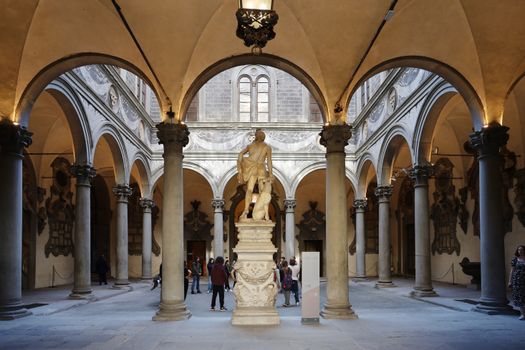 Photo: Marek Jóźwik / Pexels
The history of Renaissance art is intrinsically linked to a profound cultural, social, and intellectual movement that swept across Europe, primarily beginning in Italy during the 14th century. This 'rebirth,' as the term 'Renaissance' implies, was characterized by a renewed interest in classical antiquity, a burgeoning humanism, and a shift from theocentric to anthropocentric worldviews. The Early Renaissance, spanning roughly from 1400 to 1490, laid the foundational groundwork for the artistic explosion that was to follow. Florence, a wealthy and politically stable city-state, became the undisputed cradle of this artistic revolution. Here, patrons like the Medici family actively fostered an environment where artists could experiment and innovate, pushing the boundaries of what art could achieve.
One of the most significant innovations of the Early Renaissance was the rediscovery and application of linear perspective. Filippo Brunelleschi, a brilliant architect and engineer, is often credited with formalizing the mathematical principles of linear perspective, allowing artists to create incredibly realistic and three-dimensional spaces on a two-dimensional surface. This was a radical departure from the flat, symbolic representations common in medieval art. Masaccio, a painter of extraordinary talent, was among the first to master this technique in his frescoes, most notably in the Brancacci Chapel, which became a training ground for subsequent generations of artists. His figures possessed a newfound weight and realism, conveying emotion and occupying space in a way that had rarely been seen before.
Beyond perspective, Early Renaissance artists also embraced naturalism, striving to depict the human form and the natural world with greater accuracy and anatomical correctness. Artists like Donatello, a pioneering sculptor, imbued his bronze and marble figures with unprecedented realism and psychological depth, moving away from the idealized, often rigid forms of Gothic sculpture. His 'David' is a seminal work, being the first free-standing nude sculpture since antiquity. The emphasis on individual human experience and emotion, a core tenet of humanism, found its expression in portraiture and narrative scenes that captured human drama and psychological states. This period also saw the development of new techniques in fresco painting and the increasing use of oil paints, which allowed for richer colors, smoother transitions, and greater detail. The meticulous observation of nature, combined with a scientific approach to art, set the stage for the masterpieces of the High Renaissance. The intellectual ferment of the time, coupled with technological advancements and a supportive patronage system, created an unparalleled environment for artistic growth and experimentation, making the Early Renaissance a pivotal chapter in the
history of art. Artists began to be seen not merely as craftsmen but as intellectuals and innovators, a status that would solidify in the subsequent centuries.
The Golden Age: High Renaissance Masters and Masterpieces
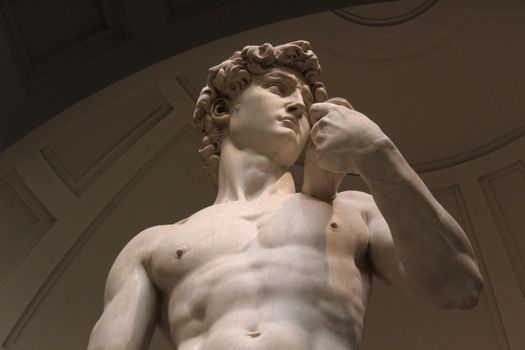 Photo: Brendana Vallée / Pexels
The High Renaissance, generally spanning from the late 1490s to around 1527, represents the zenith of Renaissance art, a period of unparalleled artistic achievement dominated by three towering figures: Leonardo da Vinci, Michelangelo, and Raphael. This era built upon the innovations of the Early Renaissance, refining techniques and pushing artistic expression to new heights of grandeur, harmony, and emotional depth. Rome, rather than Florence, became the new center of artistic patronage, largely due to the ambitious projects of powerful popes like Julius II, who sought to restore the city to its ancient glory.
Leonardo da Vinci, the quintessential 'Renaissance Man,' epitomized the era's spirit of inquiry and multidisciplinary genius. His scientific curiosity informed his art, leading to meticulous anatomical studies and a profound understanding of light and shadow. His masterpiece, 'Mona Lisa,' is renowned for its enigmatic smile and the innovative use of sfumato, a technique of subtle gradations of light and shadow that creates a soft, hazy effect, blurring lines and forms. His 'Last Supper' is a monumental fresco that revolutionized narrative painting, capturing a moment of intense psychological drama with unparalleled compositional brilliance. Leonardo's relentless pursuit of knowledge across art, science, and engineering made him a peerless innovator.
Michelangelo Buonarroti, a sculptor, painter, architect, and poet, possessed an almost superhuman talent and an intense, often tormented, vision. His sculptures, such as 'David' and 'Pietà,' are characterized by their heroic scale, powerful musculature, and profound emotional resonance, seemingly freeing the figures from the marble block. His most famous pictorial work is the ceiling of the Sistine Chapel, a colossal undertaking that depicts scenes from Genesis with an epic scope and a profound understanding of the human form. The 'Last Judgment' on the altar wall further showcased his dramatic power and innovative figural compositions. Michelangelo's work often expressed a deep spiritual intensity and a struggle between earthly and divine aspirations.
Raphael Sanzio, though tragically short-lived, achieved a level of grace, harmony, and compositional clarity that set him apart. His 'Madonnas' are celebrated for their serene beauty and tender humanity, while his frescoes in the Vatican's Stanze della Segnatura, particularly 'The School of Athens,' exemplify the High Renaissance ideals of balance, order, and intellectual grandeur. 'The School of Athens' brings together ancient Greek philosophers in a majestic architectural setting, symbolizing the synthesis of classical learning and Christian theology that was central to Renaissance humanism. Raphael's ability to combine clarity, richness, and beauty made his work immensely popular and influential, shaping the course of academic art for centuries. Together, these three masters defined the High Renaissance, creating works that continue to captivate and inspire, representing a pinnacle of human artistic achievement.
Beyond Italy: Northern Renaissance and Mannerism
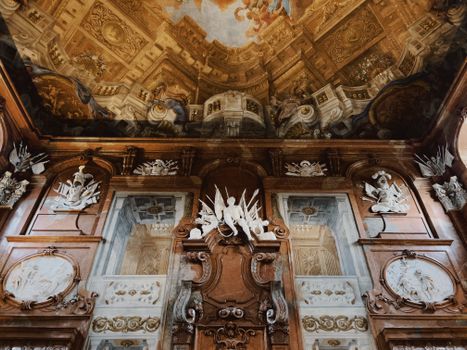 Photo: Mehmet Turgut Kirkgoz / Pexels
While Italy was undoubtedly the epicenter of the Renaissance, its artistic and intellectual currents eventually flowed northward, giving rise to the distinct movement known as the Northern Renaissance. Though influenced by Italian innovations, Northern Renaissance art maintained its own unique characteristics, often rooted in different cultural, religious, and social contexts. Unlike the Italian emphasis on classical ideals and monumental forms, Northern artists often focused on meticulous detail, intense realism, and a profound interest in texture and light, frequently employing oil paint to achieve these effects. Religious themes remained paramount, but often with a more personal and less idealized approach.
Key figures of the Northern Renaissance include Jan van Eyck, whose revolutionary oil painting techniques allowed for unprecedented luminosity and detail, as seen in his 'Arnolfini Portrait' and the 'Ghent Altarpiece.' His ability to render textures, from fur to fabric, with astonishing fidelity, created a sense of tangible reality. Hieronymus Bosch, another Flemish master, explored complex allegories and moralistic narratives, often depicting fantastical and nightmarish scenes that prefigured Surrealism. Albrecht Dürer, a German artist, brought a synthesis of Northern realism and Italian Renaissance ideals to his engravings, woodcuts, and paintings, demonstrating a mastery of both linear perspective and intricate detail. Pieter Bruegel the Elder, known for his vibrant depictions of peasant life and landscapes, captured the everyday world with warmth and humor, often imbued with underlying moral messages. The Northern Renaissance, though sometimes overshadowed by its Italian counterpart in historical narratives, offered a rich and diverse artistic landscape that contributed significantly to the broader history of Renaissance art, influencing subsequent generations with its technical prowess and thematic depth.
As the High Renaissance began to wane in the mid-16th century, a new style emerged, known as Mannerism. This period, roughly from 1520 to 1600, represented a conscious departure from the harmonious balance and naturalism of the High Renaissance. Mannerist artists, in a sense, reacted against the perfection achieved by Leonardo, Michelangelo, and Raphael, seeking new forms of expression. They often exaggerated proportions, distorted figures, used artificial and vibrant colors, and created complex, often unstable compositions. The emphasis shifted from objective beauty to subjective interpretation, from clarity to ambiguity, and from naturalism to artifice. Elongated figures, dramatic poses, and a sense of theatricality became hallmarks of the style.
Prominent Mannerist painters include Parmigianino, known for his elegant and elongated figures, as seen in 'Madonna with the Long Neck,' and Jacopo Pontormo, whose 'Deposition from the Cross' exemplifies the style's emotional intensity and unconventional color palette. Tintoretto and El Greco, though often seen as transitional figures to the Baroque, also exhibited strong Mannerist tendencies in their dramatic compositions and spiritual fervor. Mannerism, while sometimes criticized for its perceived artificiality, was a crucial bridge between the Renaissance and the Baroque, demonstrating a restless desire for innovation and emotional expression that continued to shape the
evolution of art.
Enduring Legacy and Key Takeaways from Renaissance Art
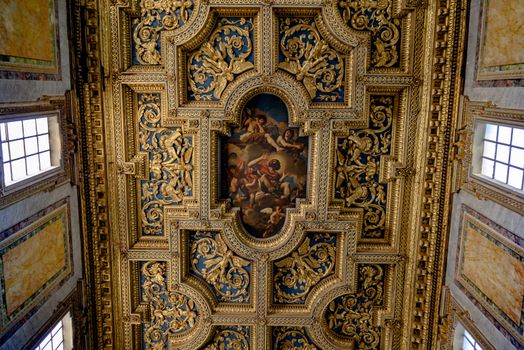 Photo: Osviel Rodriguez Valdés / Pexels
The history of Renaissance art is not merely a chronicle of past artistic achievements; it is a foundational pillar upon which much of Western art history is built. The innovations, philosophies, and masterpieces of this era had a profound and lasting impact, shaping artistic practice, aesthetic sensibilities, and even the very definition of what art could be. The Renaissance artists, through their meticulous observation, scientific inquiry, and humanistic ideals, elevated art from a craft to an intellectual pursuit, transforming the status of the artist from artisan to genius.
One of the most significant legacies is the enduring influence of linear perspective and naturalism. These techniques, perfected during the Renaissance, became standard practice for centuries, providing artists with tools to create convincing illusions of reality. The emphasis on the human form, explored with unprecedented anatomical accuracy and emotional depth, set new benchmarks for portraiture and figural composition. Furthermore, the Renaissance fostered a culture of patronage that supported artistic endeavors, leading to the creation of public and private collections that form the basis of many of today's great museums.
The Renaissance also saw the rise of art theory and art criticism, as artists and scholars began to articulate the principles and purposes of art. Treatises by figures like Leon Battista Alberti and Giorgio Vasari not only documented the lives and works of artists but also established frameworks for understanding and evaluating art, contributing to the professionalization of the art world. The concept of the 'artist as genius,' a multi-talented individual capable of intellectual and creative brilliance, was largely born in the Renaissance, exemplified by figures like Leonardo and Michelangelo.
Moreover, the thematic concerns of Renaissance art — the balance between the sacred and the secular, the celebration of human potential, the integration of classical wisdom with Christian theology — continue to resonate. The sheer beauty, technical mastery, and intellectual depth of Renaissance masterpieces continue to inspire awe and study, drawing millions to galleries and historical sites worldwide. Understanding the history of Renaissance art is not just about appreciating old paintings; it's about grasping a pivotal moment in human cultural development that profoundly shaped our visual language, our understanding of humanity, and our relationship with the past. The techniques, philosophies, and individual brilliance of the Renaissance artists laid the groundwork for the Baroque, Rococo, Neoclassicism, and countless other movements, proving that its 'rebirth' was truly a timeless and transformative event for artistic expression and human civilization itself.
**Tips for Deeper Engagement:**
* **Visit Museums:** Experience Renaissance art firsthand in institutions like the Uffizi Gallery, Vatican Museums, and the Metropolitan Museum of Art.
* **Read Primary Sources:** Explore writings by Renaissance artists and theorists to gain insight into their perspectives.
* **Study Individual Artists:** Focus on one artist's oeuvre to understand their development and contribution.
* **Consider the Context:** Always remember the historical, political, and religious environment in which the art was created.
* **Look for Symbolism:** Renaissance art is rich with symbolism; learning to decode it enhances appreciation.
