
A Definitive History of Modern Art Movements
history of modern art movements

A Definitive History of Modern Art Movements

Dive into the revolutionary periods and pivotal artists that shaped modern art, transforming how we perceive and create.

Uncover Art's Evolution

Key Takeaways

  • ✓ Modern art movements rejected traditional academic styles, emphasizing innovation and personal expression.
  • ✓ Impressionism, starting in the late 19th century, marked a significant departure with its focus on light and fleeting moments.
  • ✓ Cubism revolutionized painting by deconstructing and reassembling objects into abstract forms.
  • ✓ Surrealism explored the subconscious mind, blending dream imagery with reality.

How It Works

1
Understand the Origins

Begin by grasping the socio-political and technological shifts that set the stage for modern art's emergence. These foundational changes fueled the desire for new artistic expressions.

2
Explore Key Movements

Delve into individual movements like Impressionism, Fauvism, Cubism, and Surrealism, recognizing their distinct characteristics and seminal artists. Each movement built upon or reacted against its predecessors.

3
Trace Interconnections

Identify how different movements influenced each other, creating a complex web of artistic evolution. Understand the dialogues and debates that propelled art forward through the 20th century.

4
Appreciate Lasting Impact

Reflect on how modern art reshaped our understanding of aesthetics, creativity, and the role of art in society. Its legacy continues to inform contemporary artistic practices and cultural discourse.

The Dawn of Modern Art: Breaking from Tradition
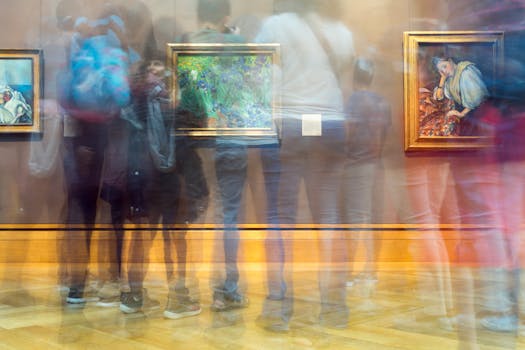
Blurred motion of gallery visitors observing art paintings in a bright, colorful space. Photo: Sergei A / Pexels
The late 19th century witnessed a seismic shift in the art world, laying the groundwork for what would become known as modern art. For centuries, Western art had largely adhered to the strictures of academic tradition, emphasizing realistic representation, historical or mythological subjects, and classical techniques. However, the rapid industrialization, urbanization, and scientific advancements of the era, coupled with profound social and political changes, began to challenge these established norms. Artists, increasingly disillusioned with the Salon system and its conservative tastes, sought new ways to express the complexities of modern life. They desired freedom from narrative constraints and a greater emphasis on individual experience and perception. This period, often marked by the emergence of Impressionism, was not just about a change in style, but a fundamental re-evaluation of art's purpose and its relationship to the viewer and the world. The development of photography, ironically, freed painters from the burden of mere imitation, allowing them to explore subjective interpretations and the ephemeral nature of reality. This desire for novelty and a break from the past was a driving force, pushing artists towards experimentation with color, form, and subject matter. The focus shifted from 'what' was depicted to 'how' it was depicted, emphasizing the artist's unique vision and emotional response. Early pioneers like Édouard Manet, though often controversial, paved the way by depicting contemporary life with a stark realism and unconventional brushwork that challenged prevailing sensibilities. His work, and that of his contemporaries, served as a crucial bridge between traditional academic painting and the revolutionary movements that would follow. This foundational period saw artists begin to organize their own exhibitions, bypassing the official Salon and fostering a sense of community and shared purpose among the avant-garde. This independence was crucial for the proliferation of new ideas and styles, allowing movements to develop organically and often in direct opposition to the established art institutions. The intellectual ferment of the time, influenced by philosophers like Nietzsche and Freud, also encouraged artists to delve deeper into psychological states and subjective realities, moving away from purely objective representation. This era was characterized by a spirit of rebellion and a profound belief in art's capacity to reflect, critique, and even shape the modern world. The initial steps taken during this period were tentative yet transformative, setting the stage for an explosion of creativity and innovation that would define the next century of art. Understanding these origins is essential to appreciating the radical nature of the subsequent modern art movements and their enduring legacy. For a deeper dive into foundational artistic concepts, explore the principles of visual arts.

Revolutionary Forms: Cubism, Fauvism, and Expressionism
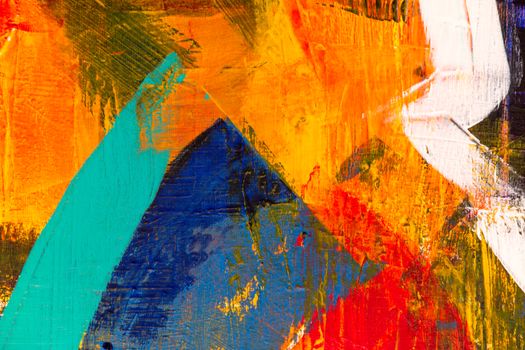
Dynamic abstract art piece featuring bold colors and textures. Photo: Steve A Johnson / Pexels
As the 20th century dawned, the momentum for artistic innovation accelerated, giving rise to movements that drastically reconfigured the very definition of visual art. Fauvism, emerging around 1905, exploded onto the scene with its audacious use of intense, non-naturalistic colors. Led by artists like Henri Matisse and André Derain, the 'Fauves' (wild beasts) rejected the soft palettes of Impressionism, opting instead for vibrant, often clashing hues applied directly from the tube. Their aim was to express emotional responses through color rather than merely describing objects, prioritizing expressive power over descriptive accuracy. This radical approach challenged viewers to see color not as a property of an object, but as an independent element capable of conveying mood and meaning. Shortly after, Cubism, pioneered by Pablo Picasso and Georges Braque, shattered conventional perspective and representation. Beginning around 1907, Cubism introduced a revolutionary way of seeing, deconstructing objects into geometric shapes and presenting multiple viewpoints simultaneously on a single canvas. This intellectual approach challenged the viewer to actively participate in reconstructing the image, moving beyond a passive gaze. Analytical Cubism, with its muted colors and complex, overlapping planes, gave way to Synthetic Cubism, which introduced collage elements and bolder forms. Cubism fundamentally altered the course of Western art, influencing everything from sculpture to architecture. Parallel to these developments, Expressionism, particularly strong in Germany, focused on conveying intense emotional states and subjective experiences rather than objective reality. Artists like Ernst Ludwig Kirchner and Wassily Kandinsky, associated with groups like Die Brücke (The Bridge) and Der Blaue Reiter (The Blue Rider), used distorted forms, vivid colors, and dramatic brushstrokes to externalize inner turmoil and spiritual longing. Expressionism was a powerful response to the anxieties of the modern world, particularly the burgeoning industrial society and the psychological impacts of war. Unlike the more analytical approach of Cubism, Expressionism was deeply rooted in emotion and intuition. These movements, though distinct, shared a common thread: a profound rejection of mimetic representation and a fervent desire to explore new dimensions of artistic expression. They pushed the boundaries of what art could be, laying the groundwork for even more abstract and conceptual approaches. The rapid succession of these groundbreaking styles underscored a period of unprecedented experimentation and a collective drive to redefine art's role in a rapidly changing world. Each movement, in its own way, contributed to the ongoing dialogue about perception, reality, and the artist's subjective truth, forever altering the landscape of modern aesthetics.

The Surreal and the Abstract: Exploring Inner and Outer Worlds
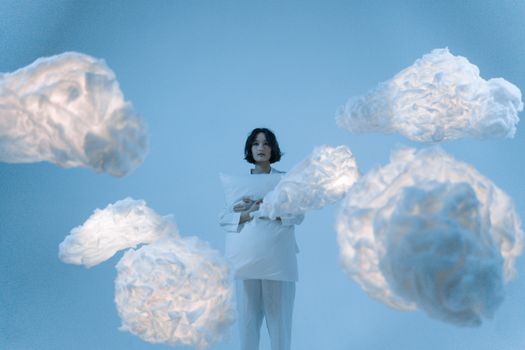
A serene portrait of an Asian woman surrounded by illuminated clouds in a conceptual, dreamy setting. Photo: Ron Lach / Pexels
The period following World War I saw art delve deeper into the realms of the subconscious and pure abstraction, reflecting a world grappling with profound psychological and societal upheaval. Dadaism, emerging during the war, was a nihilistic anti-art movement that questioned all established norms, including art itself. It paved the way for Surrealism, which officially began with André Breton's manifesto in 1924. Surrealism sought to liberate the human imagination by tapping into the subconscious mind, dream states, and irrational thought. Artists like Salvador Dalí, René Magritte, and Joan Miró created bizarre and often disturbing juxtapositions of ordinary objects, blurring the lines between reality and fantasy. Their work aimed to explore the 'surreal' – a higher reality beyond conscious thought – and challenged viewers to confront their own inner worlds. Techniques like automatic drawing and frottage were employed to bypass rational control and access spontaneous creative impulses. Surrealism's influence extended beyond painting and sculpture, impacting literature, film, and psychology, demonstrating art's capacity to engage with profound philosophical questions. Simultaneously, abstract art continued to evolve, moving towards complete non-objectivity. Piet Mondrian, a key figure in the De Stijl movement, developed Neoplasticism, characterized by strict geometric forms, primary colors, and straight lines. His aim was to achieve universal harmony and order through pure abstraction, reducing painting to its most fundamental elements. Wassily Kandinsky, often credited with creating the first truly abstract paintings, believed art should convey spiritual and emotional states through color and form, free from any representational constraints. His theories on the spiritual in art profoundly influenced the development of abstract expression. The Bauhaus school in Germany, founded by Walter Gropius, championed the integration of art, craft, and technology, fostering a multidisciplinary approach that influenced architecture, design, and fine art. Artists like Paul Klee and Lyonel Feininger taught there, exploring form, color, and texture in innovative ways that pushed the boundaries of abstraction. These movements, whether exploring the depths of the psyche or the purity of abstract form, represented a continued rejection of traditional realism. They expanded the definition of art to include conceptual ideas, psychological exploration, and the formal elements themselves as subjects. The interplay between these diverse approaches demonstrates the vibrant and often contradictory spirit of modernism, constantly seeking new avenues for expression and understanding. For further reading on the psychological underpinnings of art, consider the role of emotion in artistic creation.

Post-War Innovations and Contemporary Directions

The aftermath of World War II brought a new wave of artistic responses, shaped by existential anxieties, technological advancements, and a burgeoning global consciousness. Abstract Expressionism emerged in the United States, particularly in New York, becoming the first truly American art movement to achieve international prominence. Artists like Jackson Pollock, with his revolutionary 'drip' paintings, and Mark Rothko, with his contemplative color fields, emphasized spontaneous gesture, emotional intensity, and large-scale canvases. This movement shifted the art world's center from Paris to New York and championed the idea of the painting as a record of the artist's direct physical and psychological engagement. Following Abstract Expressionism, Pop Art burst onto the scene in the 1950s and 60s, challenging the elitism of high art by drawing inspiration from popular culture, advertising, and everyday objects. Andy Warhol, Roy Lichtenstein, and Claes Oldenburg transformed consumer products, comic strips, and celebrity images into iconic artworks, blurring the lines between art and commerce. Pop Art was often ironic, critical, and playful, reflecting a society increasingly saturated with media and consumerism. Minimalism, in contrast, sought to strip art down to its essential elements, focusing on geometric forms, industrial materials, and a complete absence of narrative or emotional content. Artists like Donald Judd and Dan Flavin created sculptures and installations that emphasized pure form, space, and the viewer's physical experience of the artwork. This movement was a reaction against the perceived excesses of Abstract Expressionism and aimed for an objective, impersonal aesthetic. Conceptual Art, which gained prominence in the late 1960s, took the idea of art even further, asserting that the 'idea' or 'concept' behind the artwork is more important than the finished object itself. Artists like Sol LeWitt and Joseph Kosuth used text, documentation, and ephemeral gestures to challenge traditional notions of authorship, value, and the very nature of art. This opened the door for performance art, installation art, and a multitude of post-modern practices that continue to evolve today. The late 20th and early 21st centuries have seen a proliferation of styles, often referred to as Postmodernism, characterized by eclecticism, irony, and a questioning of grand narratives. Contemporary art continues to push boundaries, embracing new media, digital technologies, and global perspectives, constantly redefining what art can be and do in an ever-changing world. The legacy of modern art movements is not just a collection of styles, but a continuous inquiry into the nature of human experience and expression.

Comparison

MovementKey FocusDominant StyleNotable Artists
ImpressionismLight, fleeting momentsBrushstrokes, vibrant colorMonet, Renoir, Degas
CubismMultiple perspectives, geometryFragmented forms, abstractPicasso, Braque, Gris
SurrealismSubconscious, dreamsJuxtaposition, fantasyDalí, Magritte, Miró
Abstract Exp.Emotion, gestureLarge scale, non-representationalPollock, Rothko, de Kooning
Pop ArtPopular culture, consumerismBold imagery, mass mediaWarhol, Lichtenstein, Oldenburg

What Readers Say

"This article provided an incredibly clear and insightful journey through the history of modern art movements. I finally understand the connections between different styles!"

Sarah J. · Brooklyn, NY

"As an art enthusiast, I found this overview extremely helpful. The way it broke down each movement and its significance was masterful."

David M. · Chicago, IL

"I used to find modern art intimidating, but this piece made it accessible and fascinating. My next museum visit will be so much more enriching thanks to this guide."

Emily R. · Austin, TX

"Very comprehensive! While I wished for a bit more on post-modernism, the depth on early and mid-20th century movements was superb and well-researched."

Mark T. · Los Angeles, CA

"This article is a treasure trove for students and casual learners alike. It clarifies complex concepts with ease and provides a solid foundation for understanding art history."

Jessica L. · Miami, FL

Frequently Asked Questions

What defines a 'modern art movement'?

Modern art movements are generally characterized by a departure from traditional, academic artistic conventions, emphasizing innovation, experimentation, and a focus on subjective experience, abstract forms, or conceptual ideas. They typically emerged from the late 19th century through the mid-20th century, seeking to reflect or critique the modern world.

Is contemporary art the same as modern art?

No, while related, contemporary art generally refers to art produced from the latter half of the 20th century up to the present day. Modern art refers to movements predominantly from the late 19th century to the mid-20th century. Contemporary art often builds upon or reacts to the foundations laid by modern art.

How can I start learning about modern art movements?

Begin by exploring foundational movements like Impressionism, Fauvism, and Cubism to understand the initial breaks from tradition. Visit local museums, read introductory art history books, and engage with online resources that provide visual examples and historical context. Focus on understanding the 'why' behind each movement.

Why is modern art often perceived as 'difficult' or 'strange'?

Modern art often challenges conventional notions of beauty and representation, requiring viewers to engage with art on an intellectual or emotional level rather than simply aesthetic appreciation. Its focus on abstraction, symbolism, and subjective experience can be unfamiliar, but understanding its historical context and the artist's intent can unlock its meaning.

What was the most influential modern art movement?

It's difficult to pinpoint one, as influence is subjective. However, Cubism is often cited as one of the most influential, as it fundamentally altered the way artists conceived of space, form, and representation, impacting subsequent movements like Futurism, Constructivism, and even abstract art.

Who should explore the history of modern art movements?

Anyone with an interest in culture, history, human expression, or visual creativity will find value in exploring modern art movements. It's particularly beneficial for artists, designers, historians, students, and anyone seeking to broaden their understanding of how societal shifts are reflected in artistic creation.

Are there any ethical considerations in studying modern art?

Studying modern art involves acknowledging its historical context, including periods of war, colonialism, and social upheaval. It's important to approach the art with an awareness of the cultural and political landscapes in which it was created, and to critically examine the perspectives and biases inherent in art historical narratives.

What are the future trends in art building on modern movements?

Contemporary art continues to expand on modern movements by integrating new technologies like AI and virtual reality, engaging with global sociopolitical issues, and exploring interdisciplinary practices. It often blurs boundaries between art forms and challenges traditional gallery spaces, reflecting an ongoing quest for innovative expression and relevance.

Embark on a captivating journey through the history of modern art movements. Discover the visionaries, the rebellions, and the timeless creations that reshaped our world. Start your exploration today and deepen your appreciation for artistic innovation.

Topics: history of modern art movementsart history periodsmodern art stylesavant-garde art20th century art
Leo List

DK Escorts LU Escorts AT Escorts SE Escorts FI Escorts CH Escorts DE Escorts HR Escorts IE Escorts GR Escorts CZ Escorts NO Escorts BE Escorts FR Escorts SI Escorts IL Escorts NL Escorts PL Escorts HU Escorts ES Escorts IT Escorts PT Escorts SK Escorts RO Escorts ZA Escorts UY Escorts US Escorts UK Escorts NZ Escorts AU Escorts
Brampton weed
Adultwork EstrelaBet Vai de Bet R7 Bet Betão Galera Bet Rainbet Bet9ja Shop SportyBet BetKing Sisal Loto Foot Hollywoodbets YesPlay Odibets RushBet Jugabet BetWarrior BetCity MSport betPawa Fortebet