
Unraveling Different Types of Art Styles: A Comprehensive Guide
different types of art styles

Unraveling Different Types of Art Styles: A Comprehensive Guide

Dive into the captivating world of art and discover the diverse styles that have shaped human expression.

Explore Art Styles

Key Takeaways

  • ✓ Art styles are distinct visual languages reflecting historical, cultural, and personal contexts.
  • ✓ Categorizing art styles helps in understanding artistic evolution and societal shifts.
  • ✓ Many contemporary artists blend elements from multiple historical styles.
  • ✓ Appreciating different art styles deepens one's connection to human creativity and history.

How It Works

1
Identify Key Characteristics

Look for recurring visual elements like brushwork, color palette, subject matter, and composition. These are the hallmarks of a specific style.

2
Understand Historical Context

Research the period and cultural environment in which a style emerged. This provides insight into its motivations and influences.

3
Recognize Influential Artists

Familiarize yourself with prominent artists associated with each style. Their works often exemplify the style's core tenets.

4
Practice Active Viewing

Engage with various artworks, comparing and contrasting them. Over time, you'll develop an intuitive understanding of different styles.

The Foundations: Classical and Traditional Art Styles
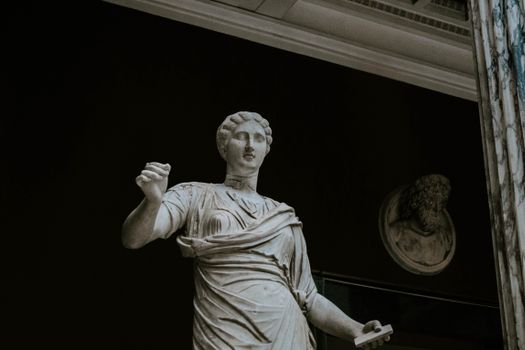
A classical marble statue showcased in a dimly lit museum gallery, emphasizing its timeless beauty. Photo: Ejov Igor / Pexels
To truly appreciate the vast spectrum of different types of art styles, we must first journey back to their foundational roots. Classical and traditional art styles, often spanning millennia, laid the groundwork for nearly everything that followed. These styles are characterized by their adherence to established conventions, their emphasis on order, harmony, and often, their direct connection to religious or mythological narratives. Ancient Egyptian art, for instance, is instantly recognizable by its highly stylized, rigid forms, its use of hierarchical scale, and its focus on the afterlife. Figures are often depicted in a composite view – a profile head, frontal torso, and profile legs – conveying a sense of permanence and divine order. This was not merely an aesthetic choice, but a deeply symbolic one, reflecting their beliefs about eternity and the cosmic balance. Similarly, Ancient Greek and Roman art, while evolving over centuries, consistently pursued ideals of beauty, proportion, and naturalism. The Greeks perfected the representation of the human form, striving for an idealized, athletic physique that embodied their philosophical ideals of perfection and civic virtue. Roman art, building upon Greek foundations, often emphasized realism, historical narrative, and portraiture, reflecting their pragmatic and imperial ambitions. Their sculptures and mosaics told stories of conquest, leadership, and daily life, serving as powerful propaganda and cultural records. Moving into the medieval period, European art became predominantly religious, with styles like Romanesque and Gothic emerging. Romanesque art (roughly 1000-1200 AD) is characterized by its heavy, thick-walled churches, rounded arches, and often crude, yet powerfully expressive, sculptural decoration. Its purpose was didactic, illustrating biblical stories for a largely illiterate populace. Gothic art, flourishing from the 12th to 16th centuries, brought with it soaring cathedrals, pointed arches, ribbed vaults, and vast stained-glass windows that flooded interiors with divine light. Its elongated figures and emotional intensity aimed to inspire awe and devotion. Further east, traditional Chinese painting, with its emphasis on landscape, calligraphy, and the philosophical concept of 'qi' (life force), developed its own distinct aesthetic. Brushwork, ink wash, and the interplay of empty space are paramount, often conveying a sense of meditative tranquility and connection to nature. Japanese art, while influenced by China, developed unique styles like Ukiyo-e (pictures of the floating world) during the Edo period, depicting scenes of everyday life, kabuki actors, and beautiful courtesans with bold lines and vibrant colors. These styles, though ancient, continue to influence contemporary artists, demonstrating the enduring power and beauty of traditional artistic expression. Understanding these roots is crucial for any deeper dive into the evolution of artistic expression and the myriad forms it takes.

The Renaissance and Beyond: Resurgence and Revolution
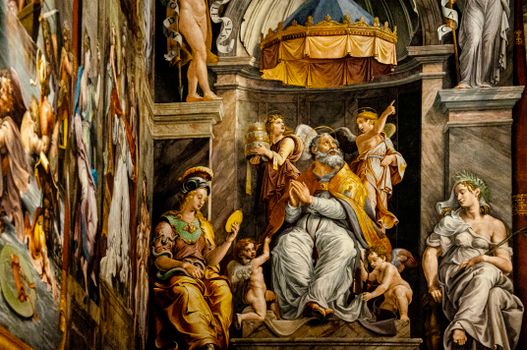
Intricate Renaissance painting depicting religious figures in Vatican City. Photo: Jing Zhan / Pexels
The Renaissance, a period of profound cultural, artistic, and scientific rebirth in Europe (roughly 14th-17th centuries), marked a pivotal shift in the trajectory of art. This era saw a renewed interest in classical antiquity, coupled with a burgeoning humanism that placed mankind at the center of the universe. Renaissance art, spearheaded by masters like Leonardo da Vinci, Michelangelo, and Raphael, emphasized perspective, anatomical accuracy, and emotional depth. Artists like Giotto had already begun to break from the flat, symbolic representations of the medieval era, introducing a sense of three-dimensionality and human emotion. The High Renaissance perfected these techniques, creating works of unparalleled grandeur and psychological insight. Think of Da Vinci's 'Mona Lisa' with her enigmatic smile, or Michelangelo's 'David,' a sculpture that breathes with life and idealized form. This period laid the groundwork for the scientific approach to art that would influence Western painting for centuries. Following the Renaissance, several distinct movements emerged, each responding to or reacting against its predecessors. Baroque art (17th century), championed by artists like Caravaggio and Bernini, was characterized by drama, intense emotion, grandeur, and dynamic movement. It sought to evoke awe and overwhelm the senses, often serving the Counter-Reformation with powerful religious imagery. Rococo (18th century), a reaction against the severity of the Baroque, embraced lightness, elegance, and frivolity. Artists like Fragonard and Watteau depicted scenes of aristocratic leisure, love, and pastoral beauty with delicate colors and playful ornamentation. Neoclassicism, arising in the late 18th and early 19th centuries, was a return to the perceived purity and moral rectitude of classical art, often linked to Enlightenment ideals and revolutionary fervor. Jacques-Louis David's heroic canvases are quintessential examples. Romanticism, a powerful counter-movement in the early 19th century, prioritized emotion, individualism, and the sublime over reason and order. Artists like Eugène Delacroix and J.M.W. Turner explored themes of nature's raw power, historical drama, and intense personal feeling, often using dramatic brushwork and vibrant color. Realism, emerging mid-19th century, sought to depict life as it truly was, without idealization or romantic embellishment. Gustave Courbet's works, for example, focused on ordinary people and mundane subjects, challenging academic conventions. These periods of artistic flourishing and rebellion demonstrate the dynamic nature of art, constantly evolving as society and human thought progress.

Modern and Contemporary: Breaking Boundaries in Different Types of Art Styles

Dynamic abstract expressionist artwork with bold colors and textures. Photo: Steve A Johnson / Pexels
The late 19th and 20th centuries witnessed an explosion of innovative and often revolutionary different types of art styles, collectively known as Modern Art. This era was defined by a radical departure from traditional academic approaches, a questioning of established norms, and a relentless exploration of new forms, materials, and ideas. Impressionism, emerging in the 1870s with artists like Claude Monet and Pierre-Auguste Renoir, focused on capturing fleeting moments of light and atmosphere, often using broken brushstrokes and vibrant, unmixed colors. It was a direct challenge to the meticulous detail and historical narratives favored by the Salon. Post-Impressionism, including artists such as Vincent van Gogh, Paul Cézanne, and Georges Seurat, built upon Impressionist color and light but introduced greater emotional expression, symbolic content, and structural rigor. Cubism, pioneered by Pablo Picasso and Georges Braque in the early 20th century, shattered traditional perspective, depicting objects from multiple viewpoints simultaneously. This revolutionary approach profoundly influenced subsequent art movements. Expressionism, seen in the works of Ernst Ludwig Kirchner and Wassily Kandinsky, emphasized emotional experience over objective reality, often using distorted figures and vibrant, non-naturalistic colors to convey inner feelings. Surrealism, led by André Breton and exemplified by Salvador Dalí and René Magritte, delved into the subconscious mind, juxtaposing dreamlike imagery and illogical scenes to challenge rational thought. The impact of these movements on subsequent generations of artists cannot be overstated. As the 20th century progressed, Abstract Expressionism, Pop Art, Minimalism, Conceptual Art, and countless other movements emerged, each pushing the boundaries of what art could be. Abstract Expressionists like Jackson Pollock and Mark Rothko focused on the act of painting itself, conveying emotion and energy through large-scale, non-representational canvases. Pop Art, with Andy Warhol and Roy Lichtenstein, embraced popular culture and commercial imagery, blurring the lines between high art and everyday objects. Contemporary art, broadly defined as art created from the 1960s or 1970s to the present day, is incredibly diverse and often defies easy categorization. It frequently engages with social, political, and cultural issues, utilizing a vast array of media, from video installations to performance art. This era celebrates individuality, conceptual depth, and the constant redefinition of artistic practice, reflecting the complex and rapidly changing world we inhabit. The journey through modern and contemporary art is a testament to humanity's unending quest for new ways to see, interpret, and express reality.

Navigating the Art World: Tips for Appreciation and Identification
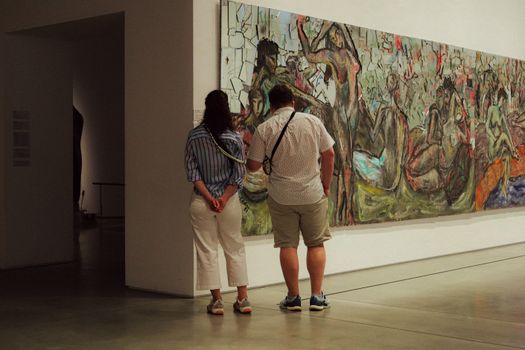
Two adults observe a large abstract painting in a modern art museum gallery. Photo: rana aldemir / Pexels
Understanding the different types of art styles can initially seem daunting, given the sheer volume and diversity. However, with a few key approaches, anyone can enhance their appreciation and ability to identify various artistic expressions. **Tips for Appreciation and Identification:** * **Start with the Basics:** Familiarize yourself with the major art movements chronologically. This provides a historical roadmap and helps contextualize subsequent developments. Begin with classical art and gradually move through the Renaissance, Baroque, Romanticism, and into the modern and contemporary eras. * **Focus on Key Characteristics:** For each style, identify its signature elements. Is it the brushwork (smooth, visible, impasto)? The color palette (bright, muted, symbolic)? The subject matter (portraits, landscapes, abstract forms)? The composition (balanced, dynamic, fragmented)? These visual cues are your primary tools for identification. * **Look for the 'Why':** Consider the historical, social, and cultural context in which the art was created. What were the artists reacting against or celebrating? What technological advancements influenced their work? Understanding the motivations behind a style provides deeper insight than just observing its aesthetics. * **Visit Museums and Galleries:** There's no substitute for seeing art in person. The scale, texture, and nuances of a work are best experienced firsthand. Pay attention to the labels and descriptions provided, as they often highlight key aspects of the style and artist. * **Read and Research:** Supplement your viewing with reading. Art history books, artist biographies, and online resources can provide invaluable information and different perspectives. Don't be afraid to delve into academic texts or explore specialized journals. * **Compare and Contrast:** Place artworks from different styles side-by-side (mentally or physically). What are their similarities? What are their differences? This comparative analysis sharpens your eye and helps solidify your understanding of distinct stylistic choices. * **Trust Your Gut (and Educate It):** While academic knowledge is crucial, also pay attention to your emotional response. Art is meant to evoke feeling. As you learn more, your 'gut feeling' will become more informed and refined. * **Don't Be Afraid of What You Don't Understand:** Contemporary art, in particular, can be challenging. It often requires more intellectual engagement and an openness to new definitions of art. Embrace the challenge and seek to understand the artist's intent, even if the aesthetic isn't immediately appealing. * **Engage with Art Communities:** Join online forums, attend lectures, or participate in local art groups. Discussing art with others can open up new interpretations and deepen your understanding. This collective learning can be incredibly enriching. By adopting these strategies, you'll find yourself not only identifying different types of art styles with greater ease but also developing a profound appreciation for the human spirit's boundless capacity for creative expression.

Comparison

FeatureRenaissanceImpressionismCubism
Key FocusHumanism, realism, perspectiveLight, atmosphere, fleeting momentsMultiple perspectives, geometric forms
BrushworkSmooth, blended, invisibleVisible, broken, distinct dabsFragmented, angular, analytical
Subject MatterReligious, mythological, portraitsLandscapes, cityscapes, everyday lifeStill lifes, portraits, figures (deconstructed)
Color PaletteNaturalistic, rich, chiaroscuroVibrant, bright, unmixed colorsOften muted, earthy tones (early Cubism)
RepresentationIdealized realitySubjective perception of realityDeconstructed reality

What Readers Say

"This article finally made sense of the different types of art styles for me. I used to feel overwhelmed, but now I can identify key characteristics with confidence."

Sarah J. · Brooklyn, NY

"As an aspiring artist, understanding the historical context of different types of art styles is crucial. This guide provided an excellent, comprehensive overview."

Mark P. · Los Angeles, CA

"I loved how the article broke down complex art movements into understandable sections. My next museum visit will be so much more enriching thanks to this insight into different types of art styles."

Emily R. · Chicago, IL

"A very thorough exploration, though I would have liked a bit more on African or indigenous art styles. Still, it's an incredibly helpful resource for Western art history."

David L. · Miami, FL

"This guide didn't just list styles; it explained the 'why' behind them. It really deepened my appreciation for the different types of art styles and their cultural significance."

Jessica M. · Seattle, WA

Frequently Asked Questions

What is the most famous art style?

There isn't one single 'most famous' art style, as fame can be subjective and vary by region and era. However, styles like Renaissance, Impressionism, and Cubism are widely recognized and have had a profound global impact due to their revolutionary approaches and iconic works.

Is it possible to mix different art styles in one piece?

Absolutely! Many contemporary artists intentionally blend elements from various art styles to create unique and innovative works. This practice, often called eclecticism, allows for rich, multi-layered expressions that transcend traditional boundaries and reflect a diverse world.

How can I develop my own art style?

Developing your own art style involves extensive practice, experimentation, and self-reflection. Start by studying artists you admire, learn different techniques, and then consciously break rules, combine elements, and inject your personal vision and experiences into your work. Consistency and authenticity are key.

Are certain art styles more valuable than others?

Artistic value is complex and multifaceted, encompassing historical significance, cultural impact, aesthetic appeal, and market demand. While some styles (and specific artists within them) command higher prices at auction, this doesn't inherently make them 'more valuable' in an artistic or cultural sense than other, perhaps lesser-known, styles.

What's the difference between 'art style' and 'art movement'?

An 'art movement' refers to a tendency or style in art with a specific common philosophy or goal, followed by a group of artists during a restricted period of time. An 'art style' is a broader term, describing the distinctive manner in which an artist or group of artists expresses themselves, often within or across various movements.

Who should learn about different types of art styles?

Anyone with an interest in culture, history, or creative expression can benefit from learning about different types of art styles. It's particularly useful for aspiring artists, art students, collectors, educators, and anyone who wants to deepen their appreciation for the visual world around them.

Can art styles be dangerous or controversial?

Historically, certain art styles have been deemed dangerous or controversial by authorities or societies, often due to their challenging political, social, or religious norms. For example, some avant-garde movements were suppressed for being 'degenerate,' while others sparked public outcry for their content or form. Art often serves as a mirror or a catalyst for societal debate.

What are the emerging trends in contemporary art styles?

Contemporary art is highly fluid, but current trends include a focus on digital art (NFTs, AI-generated art), socially engaged art addressing issues like climate change and identity, hyperrealism, and a resurgence of craft-based practices. Hybrid forms and interdisciplinary approaches continue to push boundaries.

Embark on your own artistic adventure. By exploring these different types of art styles, you not only gain a deeper understanding of human creativity but also enrich your personal connection to the vast and inspiring world of art. Start discovering your favorites today!

Topics: different types of art stylesart movementsart historyart genresart appreciation
Leo List

DK Escorts LU Escorts AT Escorts SE Escorts FI Escorts CH Escorts DE Escorts HR Escorts IE Escorts GR Escorts CZ Escorts NO Escorts BE Escorts FR Escorts SI Escorts IL Escorts NL Escorts PL Escorts HU Escorts ES Escorts IT Escorts PT Escorts SK Escorts RO Escorts ZA Escorts UY Escorts US Escorts UK Escorts NZ Escorts AU Escorts
Brampton weed
Adultwork EstrelaBet Vai de Bet R7 Bet Betão Galera Bet Rainbet Bet9ja Shop SportyBet BetKing Sisal Loto Foot Hollywoodbets YesPlay Odibets RushBet Jugabet BetWarrior BetCity MSport betPawa Fortebet