
Uncover the Best Watercolor Paint Sets for Stunning Art
Unlock your creative potential with the perfect watercolor set, tailored to your needs and artistic aspirations.
Find Your Perfect SetKey Takeaways
- ✓ Watercolor paints are water-soluble pigments, offering transparency and luminosity.
- ✓ Sets range from student-grade to professional-grade, impacting pigment load and lightfastness.
- ✓ Pan sets offer portability and convenience, while tube paints provide intense color and easier mixing.
- ✓ Brush quality, paper type, and palette choice significantly influence the watercolor experience.
How It Works
Beginners benefit from student-grade sets for practice, while experienced artists require professional-grade pigments for archival quality and vibrant results. Your experience dictates the ideal set's complexity and cost.
Pan sets are portable and great for travel or sketching, offering dry cakes of pigment. Tube paints provide highly concentrated, creamy pigment, ideal for larger washes and intense color mixing.
Professional sets use single-pigment colors with high lightfastness ratings, ensuring your artwork resists fading over time. Student sets often use hues (mixes) and may have lower lightfastness, suitable for practice.
Some sets come with brushes, palettes, or even paper. Research reputable brands known for quality and consistency in their watercolor offerings to ensure a reliable artistic experience.
Understanding Watercolor Paint Formats: Pans vs. Tubes
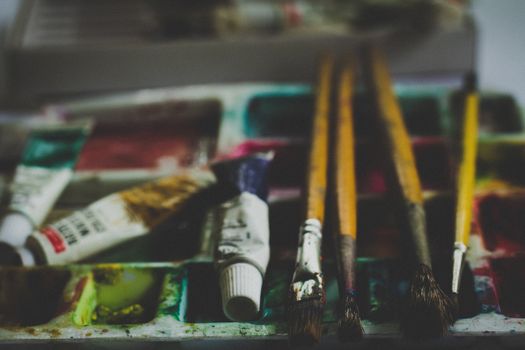 Photo: Rahul Pandit / Pexels
Pan watercolors, often found in compact, portable sets, consist of dried, solid cakes of pigment. These are activated by simply touching a wet brush to their surface. Their primary appeal lies in their convenience and portability, making them an excellent choice for artists who enjoy painting en plein air (outdoors), sketching in cafes, or traveling. They are less messy than tubes, as there's no squeezing involved, reducing waste and simplifying cleanup. Pan sets are also generally more economical upfront, especially for larger student sets. However, while convenient, the color intensity from pan paints can sometimes be less vibrant than tube paints, especially for large, saturated washes, as it can take more effort to load the brush with a high concentration of pigment. They are perfect for detailed work, layering, and building up color gradually. For beginners, a pan set often provides an accessible entry point into watercolor, allowing them to experiment with a wide range of colors without significant investment.
Tube watercolors, on the other hand, contain a moist, highly concentrated pigment. Squeezed directly onto a palette, they offer immediate access to rich, intense color. This format is favored by professional artists and those who require large quantities of vibrant color for extensive washes, bold strokes, or working on bigger canvases. The high pigment load in tube paints means you can achieve deep, saturated colors with ease, and they mix beautifully, allowing for a vast spectrum of custom shades. While tube paints might seem more expensive per unit, a little goes a long way, and their concentrated nature can be very cost-effective in the long run, particularly if you find yourself using specific colors frequently. They also allow for easier refilling of empty pan wells, giving you the best of both worlds. The downside is they can be messier, require a separate palette for mixing, and are less ideal for quick, on-the-go sketching unless pre-squeezed into a travel palette. Ultimately, the choice between pans and tubes often comes down to your preferred working style, the scale of your projects, and your need for portability versus maximum color intensity. Many artists find value in having both formats available for different applications. For more insights into essential art supplies, explore our guide on artist's tools.
Navigating Student vs. Professional Grade Watercolors
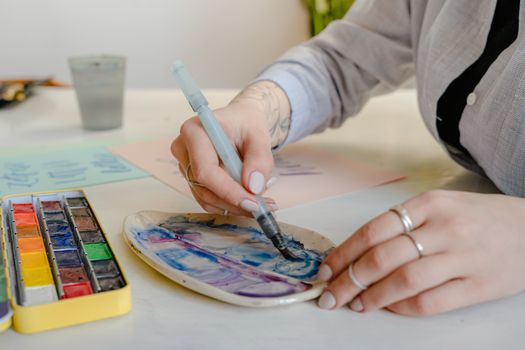 Photo: AI25.Studio Studio / Pexels
Student-grade watercolors are designed with affordability and accessibility in mind, making them an excellent starting point for beginners, hobbyists, or those who simply want to experiment without a significant financial commitment. These sets typically contain a higher proportion of fillers and binders and a lower concentration of pure pigment. This results in colors that may be less vibrant, less lightfast (meaning they are more prone to fading over time when exposed to light), and sometimes have a slightly chalkier finish. The color range in student sets might also include 'hues,' which are mixtures of less expensive pigments designed to mimic the appearance of more costly, single-pigment colors. While these characteristics mean student paints may not offer the same archival quality or brilliant intensity as professional paints, they are perfectly adequate for learning techniques, practicing, and creating non-archival artwork. They allow artists to develop their skills and explore the medium without the pressure of wasting expensive materials.
Professional-grade watercolors, conversely, are formulated with the highest quality, finely ground pigments. They boast a much higher pigment concentration, resulting in exceptionally vibrant, rich, and transparent colors. These paints exhibit superior lightfastness, ensuring that your artwork will resist fading and retain its original brilliance for decades, if not centuries, making them suitable for commissioned pieces, gallery exhibitions, and archival work. Professional sets often feature a wider array of single-pigment colors, which are essential for clean, predictable mixing and achieving true hues. The binders used are also of a higher quality, contributing to smoother application, better flow, and improved rewetting properties. Of course, this superior quality comes at a higher price point. However, for serious artists who demand the best performance and longevity from their materials, the investment in professional-grade paints is well worth it. Many professional artists start with a foundational set of primary and secondary colors in artist-grade tubes, building their palette over time. When choosing, consider your artistic goals: if you're practicing, student-grade is fine; if you're creating lasting art, professional-grade is indispensable.
Key Characteristics of High-Quality Watercolor Paints
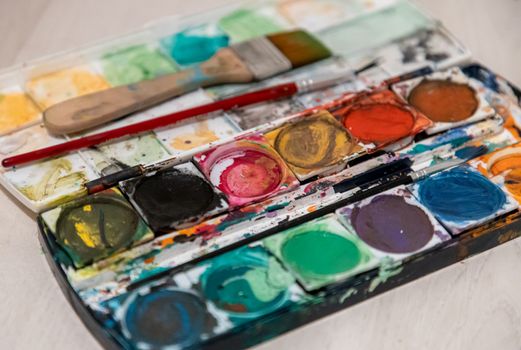 Photo: Boris Hamer / Pexels
Firstly, **Pigment Load and Purity** are paramount. High-quality paints contain a dense concentration of pure, finely ground pigments. This translates to stronger, more vibrant colors that retain their intensity even when diluted, and less reliance on fillers. Pure pigments also offer better transparency, which is a hallmark of watercolor, allowing light to reflect off the white paper through the layers of paint, creating that characteristic luminous glow. Inferior paints often use more fillers, leading to duller, opaque, and sometimes chalky results.
Secondly, **Lightfastness** is a critical factor, especially for artists creating works intended to last. Lightfastness refers to a pigment's ability to resist fading or changing color when exposed to light over time. Professional-grade paints typically have lightfastness ratings (often ASTM D4302 standards), with 'Excellent' (I) or 'Very Good' (II) being desirable. Student paints may have lower ratings, meaning your artwork could fade quickly. Always check the lightfastness rating if archival quality is important to you.
Thirdly, **Transparency and Staining Properties** vary between pigments. Transparent colors allow underlying layers and the paper's white to show through, creating depth and luminosity. Staining colors penetrate the paper fibers, making them difficult to lift or remove once dry. Non-staining colors sit more on the surface, allowing for easier lifting and manipulation. Understanding these properties helps in layering and correction techniques.
Fourthly, **Granulation** is a unique characteristic where pigments settle unevenly on the paper as the water evaporates, creating a textured, speckled effect. Some artists highly value granulation for adding visual interest and organic textures, particularly in landscapes or abstract pieces. Other pigments are smooth and non-granulating. The presence and degree of granulation are often listed by manufacturers.
Lastly, **Re-wetting Ability** is important, particularly for pan paints or dried tube paints on a palette. High-quality watercolors re-wet easily with a damp brush, quickly releasing their color without excessive scrubbing or effort. Poor quality paints might be stubborn to re-wet, leading to frustration and less efficient painting. Considering these characteristics will help you select paints that perform beautifully and align with your artistic goals, ensuring your creative process is as rewarding as the final masterpiece. For more on the foundational elements of art, consider reading about the principles of design.
Choosing Your Palette: Tips for Selecting the Right Set
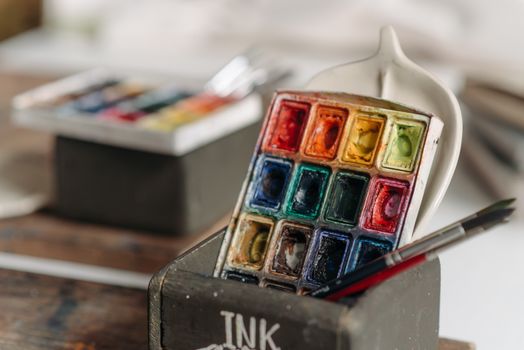 Photo: Pavel Danilyuk / Pexels
- Start with a Limited Palette for Learning: For beginners, a set with 8-12 core colors is often more beneficial than an overwhelming array. Focusing on primaries (red, yellow, blue), secondaries (orange, green, purple), and a few earth tones allows you to learn color mixing fundamentals effectively. Too many colors can lead to confusion and less understanding of how colors interact.
- Consider the Number of Colors: While a small set is great for learning, as you advance, you might want a larger set (24-48 colors) to expand your range without constant mixing. However, remember that quality often trumps quantity. A smaller set of high-quality professional paints will outperform a large set of poor-quality student paints.
- Look for Balanced Color Selection: Ensure the set includes a good balance of warm and cool tones, as well as opaque and transparent colors. A good basic set should include at least two reds (a warm and a cool), two yellows, and two blues, along with a few greens, browns, and perhaps a black or neutral tint.
- Evaluate the Palette Itself: If you're buying a pan set, consider the quality of the case. Is it sturdy? Does it have ample mixing wells? Some cases double as excellent portable palettes. For tube paints, you'll need a separate ceramic, plastic, or folding metal palette with sufficient wells for squeezing out paints and mixing.
- Read Reviews and Watch Demos: Before investing, especially in higher-end sets, take advantage of online resources. Read reviews from other artists, watch YouTube demonstrations, and see how the paints perform in real-world scenarios. This can provide invaluable insights into a set's re-wetting ability, vibrancy, and handling characteristics.
- Don't Forget Brushes and Paper: While not part of the paint set itself, the quality of your brushes and paper profoundly impacts your watercolor experience. Even the best paints will struggle on poor paper or with inadequate brushes. Invest in a few good quality brushes (a round, a flat, and a wash brush) and at least 140lb (300gsm) cold press watercolor paper.
- Consider Your Budget: While it's tempting to jump straight to professional paints, if your budget is tight, a good student-grade set from a reputable brand (like Winsor & Newton Cotman or Sakura Koi) can provide a fantastic learning experience. You can always upgrade individual colors to professional grade as you use them up or as your budget allows.
Comparison
| Feature | Best Option (Professional) | Alternative 1 (Mid-Range) | Alternative 2 (Student) |
|---|---|---|---|
| Pigment Concentration | High, Pure Pigments | Medium to High | Lower, More Fillers |
| Lightfastness | Excellent (Archival) | Very Good to Good | Fair to Good |
| Color Vibrancy | Exceptional | Very Good | Good |
| Rewetting Ability | ✓ | ✓ | ✗ (Can be stiff) |
| Cost | High | Medium | Low |
| Ideal User | Professional Artists | Advanced Students/Hobbyists | Beginners/Practice |
What Readers Say
"The Winsor & Newton Professional Watercolor set transformed my art. The colors are incredibly vibrant and re-wet instantly. My landscapes have never looked so luminous."
Sarah J. · Portland, OR"I switched from student-grade to the Daniel Smith Essentials set, and the difference is night and day. The granulation effects are stunning, and the paints mix beautifully on the palette."
Mark D. · Austin, TX"As a beginner, the Sakura Koi Watercolor Sketch Box has been perfect. It's so portable, and the colors are surprisingly good for the price. I've learned so much with it."
Emily R. · Chicago, IL"The Sennelier L'Aquarelle set is fantastic, especially the honey binder which makes them so creamy. My only minor critique is that some colors are a bit more staining than I prefer, but overall, excellent quality."
David L. · Miami, FL"For urban sketching, my all-time favorite is the Schmincke Horadam travel set. The pans are large enough, the colors are rich, and the metal case is incredibly durable. It's truly one of the best watercolor paint sets for artists on the go."
Jessica M. · Denver, COFrequently Asked Questions
What's the absolute best watercolor paint set for a complete beginner?
For a complete beginner, a student-grade pan set from a reputable brand like Winsor & Newton Cotman or Sakura Koi is highly recommended. These sets offer a good range of colors, are affordable for practice, and often come with a brush and mixing wells, providing everything you need to start without a significant investment.
Are expensive professional watercolor paints truly worth the cost?
Yes, for serious artists and those creating archival work, expensive professional watercolor paints are absolutely worth the cost. They offer higher pigment concentration, superior lightfastness, better transparency, and smoother handling, leading to more vibrant, lasting, and professional-looking artwork.
How do I choose between a pan set and tube paints?
Choose a pan set for portability, convenience, and detailed work, especially if you paint outdoors or travel frequently. Opt for tube paints if you need intense, concentrated colors for large washes, vibrant pieces, or if you prefer to mix large quantities of custom colors on a separate palette.
What's a reasonable budget for a good quality watercolor paint set?
A reasonable budget varies greatly. For a student-grade set, expect to pay $20-$60. For a mid-range artist set, $60-$150. Professional-grade sets can range from $150 to $300+ depending on the number of colors and brand. Consider starting with a smaller, high-quality professional set rather than a large, low-quality one.
How do watercolors compare to gouache paints?
Watercolors are known for their transparency and luminosity, allowing light to pass through and reflect off the paper. Gouache, while also water-soluble, is opaque due to a higher pigment-to-binder ratio and often added white pigment, offering a matte, velvety finish similar to poster paint, which makes it great for bold illustrations.
Who benefits most from a travel watercolor paint set?
Travel watercolor paint sets are ideal for urban sketchers, nature artists, art students, and anyone who enjoys painting on the go. Their compact design, built-in mixing areas, and often included travel brush make them perfect for capturing scenes and practicing wherever inspiration strikes.
Is it safe to mix different brands of watercolor paints?
Generally, it is safe to mix different brands of watercolor paints, especially if they are all artist-grade. Most reputable brands use similar binders and pigments that are compatible. However, slight variations in binder formulations might occasionally lead to subtle differences in flow or drying, so it's always good to test new combinations.
What's the future trend for watercolor paint sets?
Future trends in watercolor paint sets are likely to include more eco-friendly and sustainably sourced pigments and binders, increased availability of single-pigment options for cleaner mixing, and innovative packaging that enhances portability and usability, catering to the growing community of mobile artists and environmental consciousness.
Ready to elevate your artistic expression? Explore our expertly curated recommendations and discover the best watercolor paint sets tailored to your skill level and creative aspirations. Unleash your inner artist today and bring your visions to life with vibrant, luminous colors.